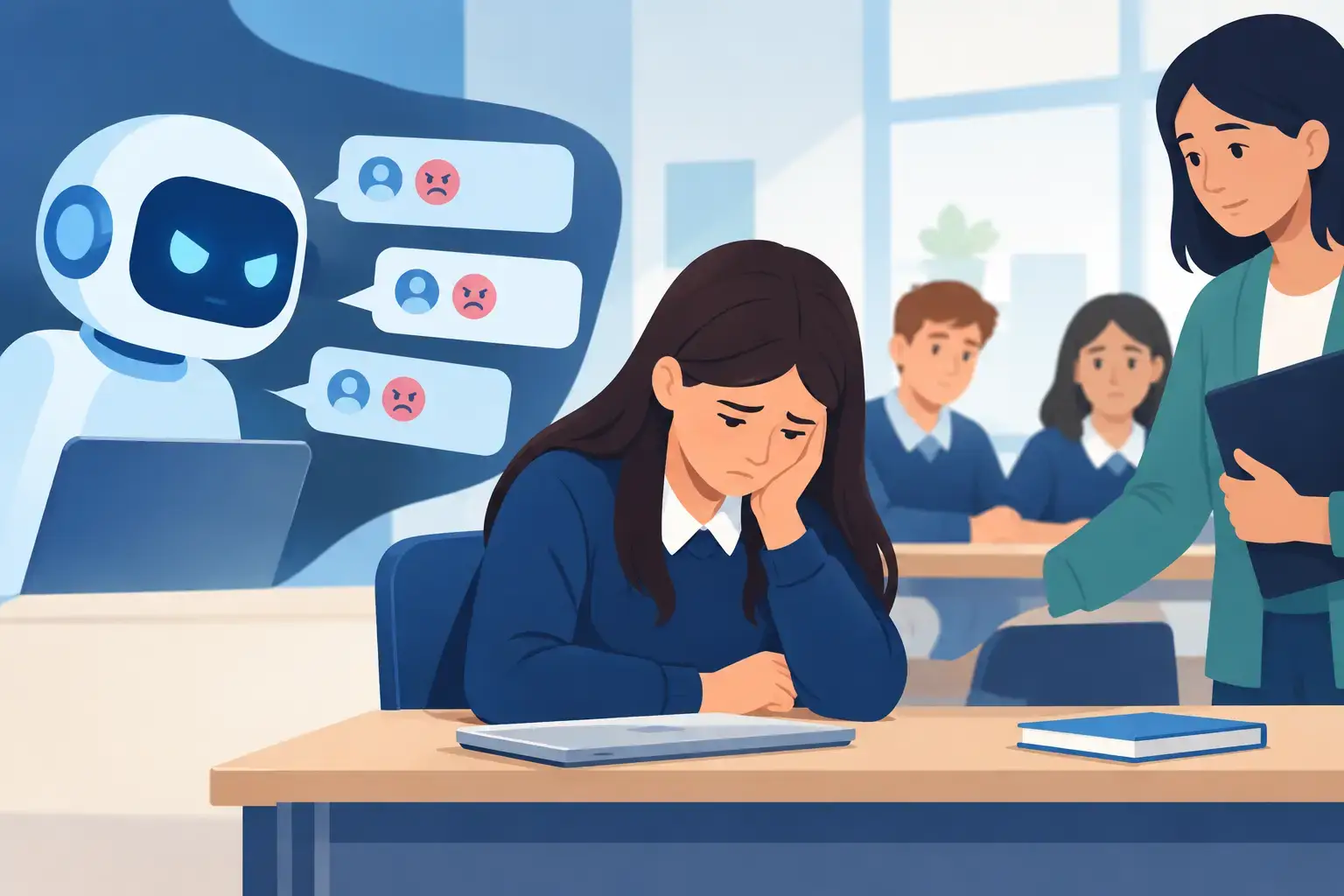
A student walks into school after a fake voice recording, a manipulated image, or a cruel chatbot exchange has already moved through group chats overnight. By first period, the harm is no longer contained to a screen. It affects friendships, attendance, concentration, and a young person’s sense of safety. AI bullying risks are not a distant concern for K-12 communities. They are a school climate issue now.
Artificial intelligence can be used to create believable false images, imitate a person’s voice, generate targeted insults, or quickly produce messages designed to embarrass and isolate someone. The technology may be new, but the purpose behind the behavior is painfully familiar: to gain power, attention, or control at another student’s expense.
Schools, families, students, and community partners do not need to panic. They do need to act early, communicate clearly, and make sure every student knows that harm created with AI is still harm.
What Makes AI Bullying Risks Different
Traditional bullying can spread quickly online. AI can make that spread faster, more convincing, and harder to untangle. A student may be targeted by a fabricated photo or video that appears real enough to fool classmates. A cloned voice can make it seem as though a student said something cruel, dangerous, or inappropriate. Generative tools can also help someone produce an endless stream of taunts, fake accounts, or humiliating content with very little effort.
The problem is not only the content itself. It is the uncertainty it creates. When students cannot tell what is real, they may question the person who was targeted instead of offering support. A false post can damage trust before the target has a chance to explain what happened.
AI-related bullying also blurs the line between conduct that begins off campus and its impact at school. A post may be made from a bedroom on a weekend, yet lead to harassment in hallways, missed classes, emotional distress, or conflict among students on Monday. Schools should focus on the effect on students and the learning environment, while following district policies and applicable legal requirements.
Recognize the Warning Signs Early
Students often do not report digital harassment because they fear adults will take away their devices, minimize the situation, or make it worse. Others may feel embarrassed that people believed a fake image or recording. That silence can allow the content to circulate and the harm to deepen.
Adults should watch for sudden reluctance to attend school, withdrawal from friends, changes in classroom participation, anxiety around phones, or a sharp drop in confidence. These signs do not prove bullying, but they are a reason to check in privately and without judgment.
A student who witnesses AI-enabled cruelty may also need support. Bystanders can feel pressure to share content, laugh along, or remain silent. Make it clear that forwarding, reposting, saving for entertainment, or commenting can extend the harm. Students need practical alternatives: do not share it, document what they saw if safe to do so, report it, and reach out to the person targeted.
How Schools Can Respond Without Making Things Worse
A strong response begins with believing that a student’s concern deserves attention. Do not require a young person to prove every detail before offering support. Preserve available evidence, identify immediate safety needs, and explain what the school can do next.
When a report involves manipulated content, staff should avoid repeatedly asking the targeted student to describe or display humiliating material. Limit access to the content to the people who need it for a proper response. Follow district procedures for documentation and investigation, and involve school counselors, administrators, and families as appropriate.
Speed matters, but so does care. A rushed public response can unintentionally spread the harmful material further or reveal details that should remain private. The goal is to stop ongoing harm, support the student, and address conduct fairly - not to turn a student’s worst moment into a schoolwide spectacle.
Schools also need a clear plan for incidents that involve threats, sexualized or exploitative images, impersonation, stalking, or self-harm concerns. These situations may require immediate escalation under district protocols and consultation with the appropriate authorities. Staff should know who is responsible for making those decisions before a crisis occurs.
Build AI Into Existing Bullying Prevention Plans
Schools do not need a completely separate program for every new app or technology. They do need policies and prevention lessons that name AI-enabled conduct directly. Students should understand that creating or sharing a fake image, cloned voice, impersonation account, or AI-generated insult can violate school expectations just as surely as other forms of harassment.
Teach digital citizenship as a relationship skill, not simply a list of rules. Ask students to consider consent, dignity, reputation, and the real-world impact of forwarding content. A useful question is simple: If this were made about you or someone you love, what would you want others to do?
Staff training should include realistic scenarios. A teacher who recognizes a deepfake rumor, a counselor who knows how to respond to a student in distress, and an administrator who understands how to document an incident can prevent confusion from becoming inaction. Consistent responses also build trust with families.
What Families Can Do at Home
Parents and caregivers do not have to become experts in every AI platform. The most protective step is to keep communication open enough that a child will come to them when something feels wrong. Start conversations before there is a crisis. Ask what students are seeing online, what kinds of fake content they have heard about, and how their friends respond when someone is targeted.
If your child is harmed, stay calm and avoid blaming them for using a device or being on social media. Save relevant screenshots, usernames, dates, and messages where possible. Report the content through the platform, contact the school when the incident affects the learning environment or student safety, and ask what support is available.
If your child created or shared harmful AI content, accountability is essential. That does not mean defining a young person forever by one harmful choice. It means addressing the impact, stopping the behavior, repairing harm when appropriate, and helping the student understand why consent and empathy matter. Consequences without learning may not prevent the next incident.
Give Students a Real Role in Prevention
Students are often the first to see harmful content, and they are powerful voices in changing what gets attention. Peer leadership, student advisory groups, and classroom conversations can help establish a norm that humiliation is not entertainment.
Students need to hear this plainly: you do not have to investigate a situation alone, confront someone who feels unsafe, or carry a friend’s crisis by yourself. Tell a trusted adult. Use school reporting channels. Stay with a friend who is overwhelmed. Refuse to circulate harmful content, even when everyone else seems to be watching it.
For the student who has been targeted, the message should be equally clear: what happened is not your fault, and you deserve support. The fact that content was generated or altered does not make the emotional impact less real.
A Community Response Is the Strongest Response
AI will continue to change. The core responsibility does not: adults and students must protect one another’s dignity. Prevention works best when schools set clear expectations, families reinforce them at home, students practice courageous bystander behavior, and community partners help make safety visible.
End Bullying Today believes awareness must lead to coordinated action. Schools can bring prevention education directly to their communities, while families, volunteers, and local advocates can help build a culture where students are not left to face digital cruelty alone.
The next harmful post may be created in seconds. A caring response can begin just as quickly: listen, preserve what is needed, report it, support the student, and remind every young person that their safety and dignity are worth defending.