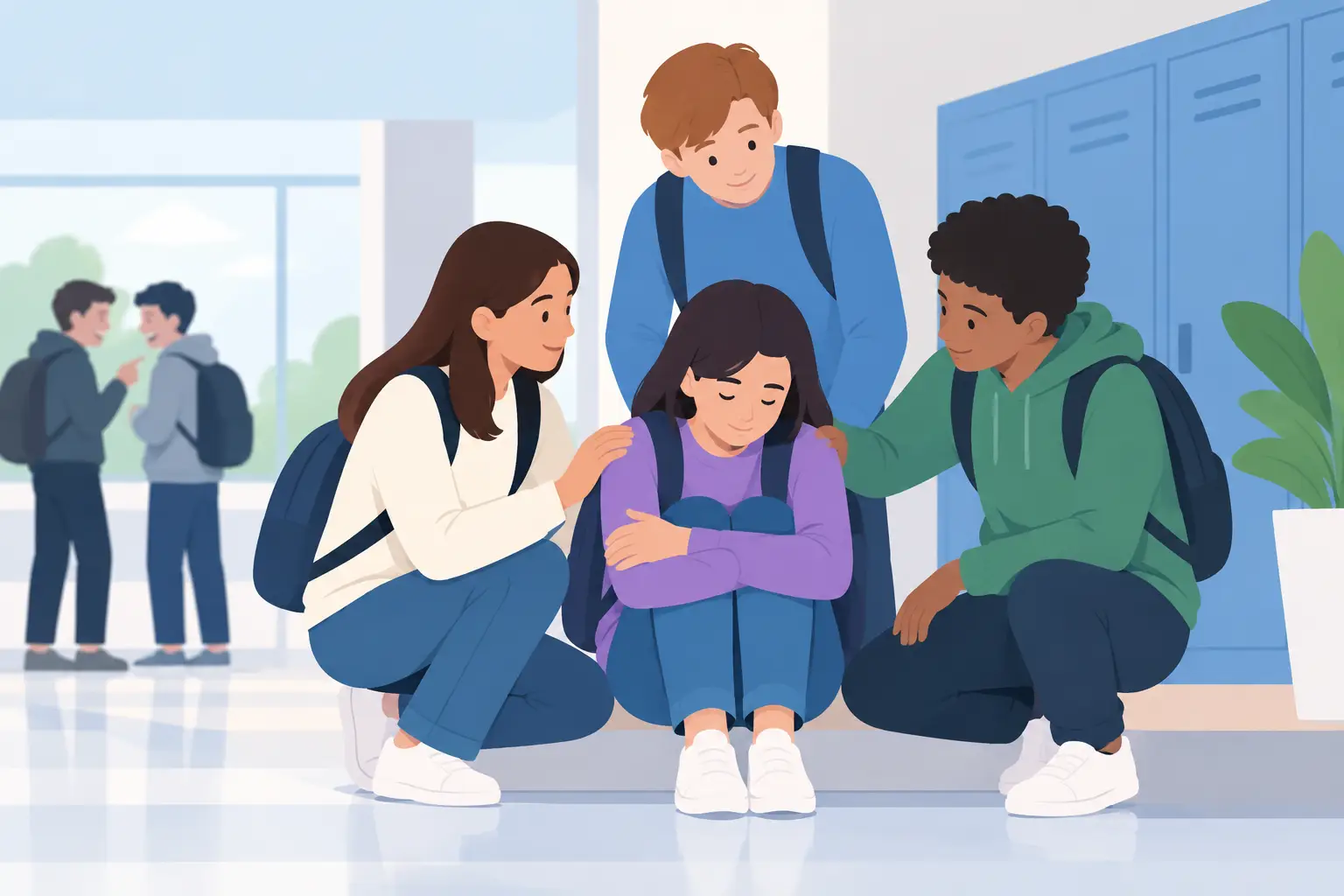
A student tells a trusted adult about repeated teasing in the hallway. The adult responds quickly, documents what happened, checks in the next day, and makes sure the student has a safe route to class. That response matters. But meaningful bullying intervention results are not limited to whether one incident stopped. They show whether students are safer, more willing to seek help, and more confident that adults will act.
Schools deserve more than a one-day assembly, a poster campaign, or a report that simply says a program was completed. Families deserve to know what is changing. Students deserve prevention efforts that make a difference where bullying often happens: on buses, in group chats, in locker rooms, at lunch, on playgrounds, and in classrooms.
What bullying intervention results should show
The strongest results reflect changes in both behavior and school climate. A decrease in reported incidents can be encouraging, but it is not enough by itself. Reports can fall because harmful behavior is less common, or because students have lost faith that reporting will help. Schools need to look at the full picture.
A healthy intervention should lead to more students identifying trusted adults, clearer understanding of how to report concerns, and stronger confidence that reports will be handled fairly. Over time, it should also reduce repeated targeting, retaliation, chronic absenteeism connected to fear, and the sense that some students must manage the problem alone.
Results are most credible when they answer practical questions: Are students experiencing fewer repeated incidents? Are adults responding more consistently? Do students from different grade levels, identities, and social groups feel equally protected? Is the school addressing cyberbullying that follows students home and returns with them the next morning?
Bullying is not solved when adults deliver a message. It is addressed when the daily experience of school changes.
Start with a clear definition of success
Before launching a program, school leaders should decide what progress will look like in their community. A middle school dealing with group-chat harassment may need a different plan than an elementary school facing exclusion on the playground. A high school may need to focus on bystander action, social media conflict, and reporting barriers that keep students silent.
The goal is not to create a perfect number. It is to create shared accountability. Administrators, counselors, teachers, families, and students should understand what the school is trying to improve and how it will know whether the effort is working.
A useful measurement plan includes several signals rather than one headline statistic:
- Student climate surveys that ask about safety, belonging, adult support, and confidence in reporting.
- Incident data that tracks patterns, locations, timing, repeat behavior, and follow-up actions.
- Attendance, nurse visits, counseling referrals, and requests to change classes when those patterns may point to avoidance or distress.
- Staff feedback on whether reporting procedures, supervision plans, and response expectations are clear and realistic.
- Family and student feedback about communication, fairness, and whether support continued after the first report.
No single measure tells the whole story. Taken together, these signals help a school distinguish a short-term public response from lasting change.
Why incident reports can be misleading
Many schools want to see fewer bullying reports. That is understandable, but interpreting the number requires care. After a school introduces clearer reporting options and builds trust, reports may rise at first. This can be a sign that students who previously stayed silent now believe someone will listen.
A rise in reports is not automatically failure. It may reveal a problem that was already present but hidden. The key question is what happens next. Are reports reviewed promptly? Are students protected from retaliation? Are families contacted appropriately? Are repeated patterns identified? Are students who caused harm taught, supervised, and held accountable rather than simply moved through a disciplinary process without support?
Likewise, a sharp decline in reports should prompt curiosity. School leaders should compare it with survey responses, attendance patterns, and informal student feedback. If students say bullying is still common but reports have dropped, the system may be difficult to use or may not feel safe.
Measure the experience of students who are most often overlooked
Average scores can hide serious problems. A school may report that most students feel safe while a smaller group experiences persistent harassment, exclusion, or bias-based bullying. Students with disabilities, LGBTQ+ students, students of color, multilingual learners, students in foster care, and students who are new to a school may face distinct risks or barriers to reporting.
This does not mean schools should expose private information or ask students to disclose more than they wish to share. It means leaders should look for disparities with care, protect confidentiality, and listen closely when a group says its experience is different from the schoolwide average.
Disaggregated data is useful only when it leads to action. If one grade level reports unsafe hallways, adjust adult coverage and transitions. If students say online harassment is ignored because it happens off campus, clarify when and how the school can respond to conduct that disrupts learning or threatens student safety. If students report that adults dismiss “jokes,” provide staff training on the difference between conflict, teasing, and repeated harmful behavior.
The implementation test: Did adults do what they promised?
Even a well-designed intervention will struggle if the adults responsible for it do not have time, training, or a consistent process. This is where many efforts lose momentum. Schools announce expectations, but teachers may not know how to document concerns, families may not know whom to contact, and students may receive different responses depending on which adult is nearby.
Implementation data makes this visible. Leaders can examine whether staff received training, whether designated reporting channels are being used, whether follow-up happened within the school’s expected timeframe, and whether students received check-ins after an incident. They can also ask staff what gets in the way: limited coverage, unclear policies, competing crises, or uncertainty about digital evidence.
Consistency is not the same as treating every situation identically. Students need individualized support, and schools must follow applicable district policies and legal responsibilities. Consistency means every student can expect to be heard, protected from retaliation, and connected to an adult who follows through.
Give students a role in the evidence
Students are experts in the parts of school adults do not always see. They know where insults circulate, which online spaces amplify conflict, and whether peers believe reporting will make things better or worse. Inviting student voice is not asking young people to solve bullying on their own. It is recognizing that prevention is stronger when students help shape it.
Student listening sessions, anonymous feedback tools, peer leadership groups, and age-appropriate classroom conversations can reveal whether an intervention is reaching daily life. Schools should make the purpose clear, avoid promising absolute confidentiality they cannot provide, and explain what adults will do with what they learn.
When students speak up, they should see evidence that adults heard them. That might mean adding supervision in a specific area, clarifying a reporting process, addressing a harmful trend, or returning to students with an honest explanation of what can and cannot change immediately. Trust grows when feedback is met with visible follow-through.
Share progress without reducing students to data
Families and community partners need transparent communication, especially when a school is investing time and resources in prevention. Still, privacy must come first. Schools can share trends, goals, response improvements, and climate survey findings without identifying students or describing individual cases.
The most useful updates explain both progress and remaining work. For example, a school might report that more students can name a trusted adult, that staff response training is complete, and that concerns remain about harassment during unstructured times. This kind of honesty builds credibility. It also invites families and community members into the work instead of presenting prevention as something handled behind closed doors.
Programs, schoolwide events, and direct outreach can create a powerful starting point, particularly when they give students language for empathy, courage, and bystander action. A school program or an End Bullying Today tour has greater impact when it is reinforced through classroom practice, family communication, staff follow-up, and student leadership after the event ends.
Turn findings into the next right action
Measurement should not become a paperwork exercise. When evidence points to a concern, act on it. If students do not know how to report, simplify the process and teach it repeatedly. If they fear retaliation, strengthen safety planning and follow-up. If staff responses vary, practice scenarios together and establish clear expectations. If a particular setting is a problem, change supervision, routines, and access to trusted adults.
Real change often arrives in small, repeatable moments: a teacher interrupting cruel language, a counselor checking back after a report, a parent asking a calm question, a student choosing not to join in, and a principal using data to address a pattern before it grows.
The result that matters most is not a polished annual report. It is the student who walks into school believing that someone will notice, someone will help, and their community will not ask them to face harm alone.