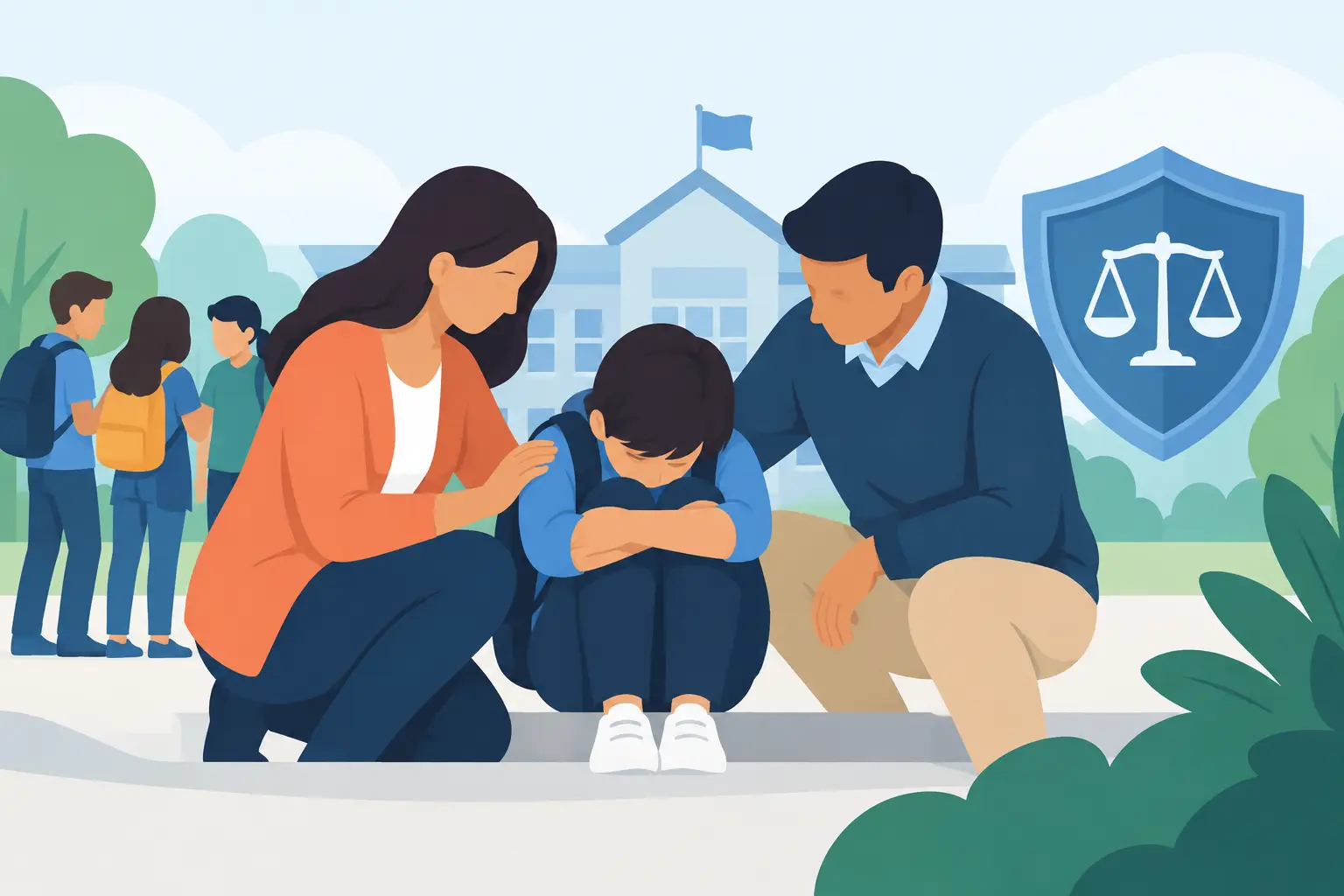
A student should not have to prove they are in crisis before adults take harm seriously. Bullying laws give schools a duty to respond, but a law on the books cannot, by itself, make a hallway, bus route, locker room, classroom, or group chat feel safe. Real protection begins when students know where to turn, adults know what to do, and the entire school community follows through.
For schools and families, the central question is not simply, “Is this bullying?” It is also: What is happening to this student’s ability to learn, belong, and participate - and what will we do next?
What bullying laws generally require
Every state has laws or policies addressing bullying in schools, but the details vary. State rules commonly require districts to adopt anti-bullying policies, define prohibited behavior, establish reporting and investigation procedures, communicate expectations to students and families, and provide consequences or interventions when misconduct is confirmed.
Most policies address bullying at school, on school transportation, at school-sponsored activities, and conduct that begins off campus but creates a substantial disruption at school. That last category matters. A cruel post made at home on a Sunday can follow a student into first period on Monday, affecting attendance, concentration, friendships, and emotional safety.
Definitions also vary, though bullying is often understood as unwanted aggressive behavior involving a real or perceived power imbalance that is repeated or likely to be repeated. Not every conflict, rude comment, or single act of misconduct meets that definition. Still, schools should not use the label as a reason to delay help. A harmful incident may require support and accountability even when it does not fit every element of a state definition.
Federal civil rights protections can apply
Some bullying also becomes a civil rights concern. Federal protections may require a school to respond when harassment is based on race, color, national origin, sex, disability, or other protected characteristics covered by applicable law. Title VI, Title IX, Section 504, and the Americans with Disabilities Act can be relevant depending on the facts.
The key issue is often whether the harassment is serious enough to limit or deny a student’s access to education. A school that knows, or reasonably should know, about such harassment must take steps that are prompt, effective, and designed to stop the harm and prevent it from returning.
This does not mean every unkind interaction triggers a federal violation. It does mean schools cannot treat identity-based harassment as ordinary peer conflict, especially when patterns emerge or a student’s education is affected.
Why compliance alone is not enough
A district can have a carefully written policy and still leave students feeling abandoned. Policies fail in practice when reporting is confusing, investigations move slowly, staff members respond inconsistently, or families receive only vague assurances that the matter is being handled.
Students notice the gap. They notice when an adult asks them to ignore repeated harassment, when a witness is told not to get involved, or when the student targeted by bullying is quietly moved while the behavior continues. These responses may be intended to restore calm, but they can teach young people that reporting leads to more isolation.
Schools also face legitimate tensions. They must protect a targeted student while respecting privacy rules and giving the accused student a fair process. They may not be able to share every disciplinary detail with a reporting family. But privacy is not a reason for silence. Staff can communicate what supports are in place, when the school will check back, how to report retaliation, and who is responsible for monitoring safety.
What a meaningful school response looks like
A strong response is more than discipline. Consequences may be appropriate, particularly when conduct is repeated, targeted, threatening, or discriminatory. Yet punishment without skill-building, supervision, and repair can leave the conditions that enabled bullying untouched.
When a report is made, the school should first assess immediate safety. Is the student afraid to attend? Has there been a threat, physical aggression, stalking, sexual harassment, or online targeting that is spreading quickly? Is there a risk of retaliation? The answers should shape a practical safety plan, not a one-size-fits-all response.
Next, the school should document the report, gather information from relevant students and staff, review available evidence, and communicate a reasonable timeline. Investigations should be thorough without forcing a child to repeatedly retell painful details to multiple adults. A designated point person can prevent that unnecessary burden.
After determining what occurred, the school should respond in ways that stop the behavior and restore access to learning. That may include increased adult supervision, schedule adjustments requested by the targeted student, counseling support, restorative processes when appropriate and voluntary, behavioral intervention for the student who caused harm, and clear consequences for retaliation.
Restorative approaches deserve care. A face-to-face conversation is not appropriate when there is an ongoing safety risk, a major power imbalance, or a student feels pressured to forgive. Repair cannot be demanded from the person who was harmed. The first obligation is safety.
Build reporting systems students will actually use
A reporting process works only if students believe it will lead somewhere. Schools should offer more than one path: a trusted adult, counselor, administrator, paper form, or monitored digital reporting option. Anonymous reporting can surface concerns that might otherwise remain hidden, although it may limit how fully a school can investigate.
Staff need clear direction on what happens after they receive a concern. “Tell the principal” is not a complete protocol. Employees should understand documentation expectations, escalation routes, timelines, confidentiality limits, and how to avoid language that blames the student who reported.
Simple phrases matter. “I’m glad you told me” opens a door. “Why didn’t you just block them?” can close it.
What families can do when bullying is reported
Families often arrive at this moment worried, angry, and unsure whether the school understands the seriousness of the situation. Begin by recording what happened: dates, locations, names of people involved, screenshots, changes in your child’s attendance or mood, and any previous reports. Save evidence, but do not encourage a child to keep engaging with harmful messages just to collect more of it.
Report the concern in writing to the appropriate school contact and ask for a meeting or response timeline. Describe the impact on your child, not only the behavior itself. For example, explain if your child is avoiding the bus, missing class, having trouble sleeping, or withdrawing from activities they once enjoyed.
Ask concrete questions: Who will be the point person? What immediate safety steps are available? How can your child report retaliation? When will the school follow up? If you believe harassment relates to a protected characteristic or disability, say so clearly and request that the school consider its civil rights obligations.
If a response is inadequate, follow the district’s complaint process and keep communications factual and organized. In situations involving threats, assault, stalking, sexual misconduct, or immediate danger, contact emergency services or law enforcement as appropriate. School discipline processes and criminal laws are different systems, and not every bullying situation belongs in the justice system. Safety should guide the decision.
Prevention is the work that changes school culture
Bullying laws set a floor. Prevention raises the standard. It asks schools to build climates where students practice empathy, speak up as witnesses, seek help early, and understand that popularity, identity, disability, appearance, religion, family circumstances, and online access must never become reasons to target someone.
That work requires adults to be visible where bullying is most likely to occur and to model respectful intervention. It requires student voice, because young people often know which spaces feel unsafe before adults do. It also requires families and community partners who reinforce the same message beyond the school day.
End Bullying Today believes awareness must lead to coordinated action. A school assembly can start a conversation, but sustained change comes from what happens afterward: clearer systems, stronger adult response, student leadership, and a community willing to protect every child’s right to learn without fear.
The next time a student reports harm, treat that moment as more than a compliance task. It is an opportunity to show them that their school community is listening, acting, and standing beside them.