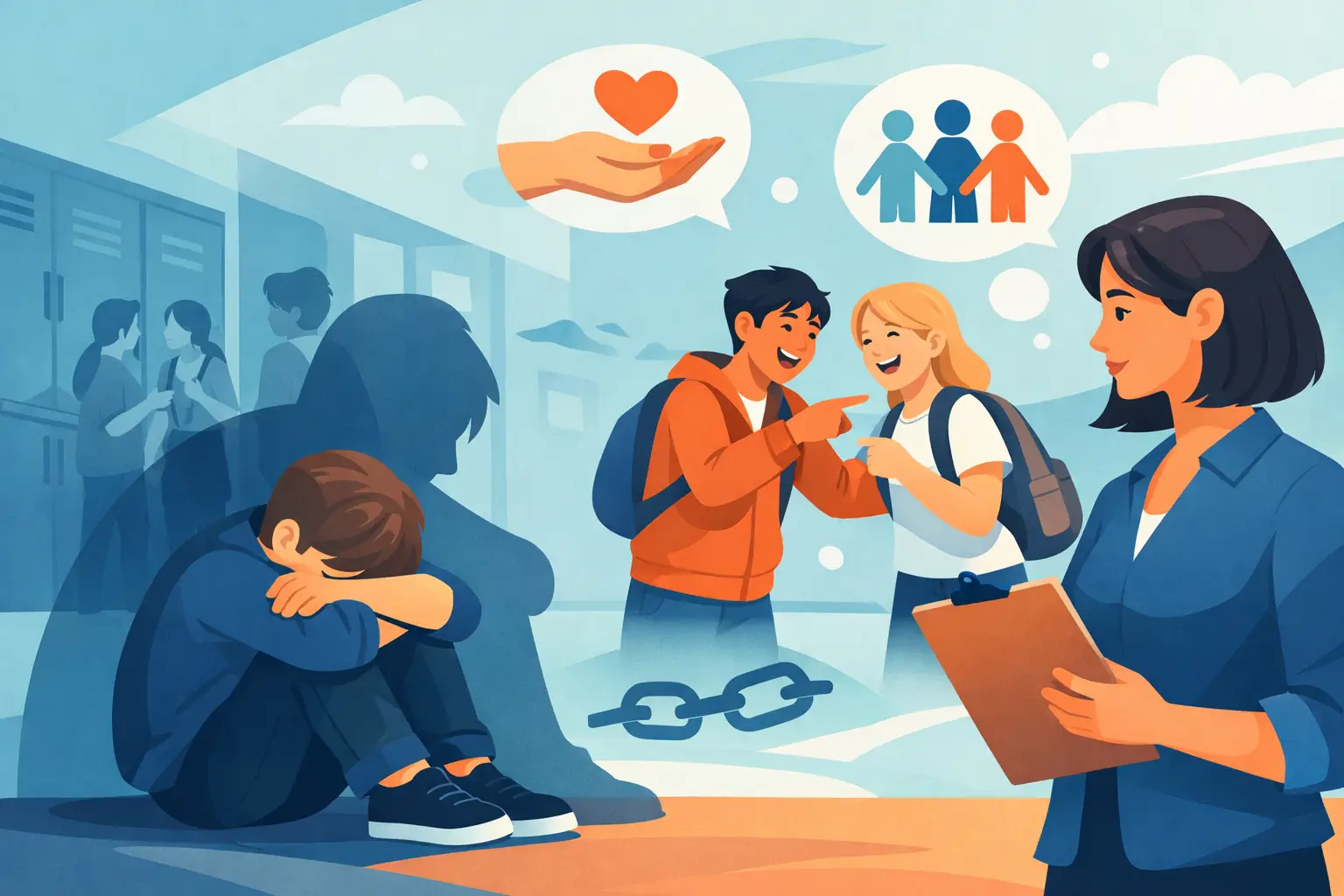
A hallway insult can look small to an adult passing by. To a seventh grader who hears it every day, watches classmates laugh, and starts avoiding lunch, it can change the entire school experience. Effective bullying lesson plans middle school students remember do more than define harmful behavior. They help young people recognize patterns, practice safer responses, and understand that every student has a role in building a respectful community.
Middle school is a critical window for this work. Students are testing social boundaries, navigating group identity, and communicating constantly through both in-person and digital spaces. A one-time assembly may raise awareness, but sustained classroom learning gives students the language and confidence to act when harm occurs.
What Middle School Students Need From a Bullying Lesson
Students in grades 6 through 8 are quick to spot lessons that feel scripted or disconnected from their lives. They need honest discussion, clear expectations, and opportunities to rehearse what to do in real situations. That means a lesson should address the difference between conflict, rude behavior, and bullying without minimizing any of them.
Conflict is a disagreement between people with relatively equal power. Rude behavior may be a one-time hurtful comment or action. Bullying involves unwanted aggressive behavior, a real or perceived power imbalance, and repetition or a strong likelihood of repetition. Students do not need a legal lecture, but they do need this distinction because it shapes how adults respond and how peers can help.
A strong lesson also avoids placing responsibility on the student targeted by bullying. Teaching students to speak up, document concerns, seek help, or stay near supportive peers can be useful safety planning. It is never a reason to suggest they caused the behavior or should solve it alone. Accountability belongs with the person causing harm, while adults must create conditions where reporting is safe and taken seriously.
A Five-Part Bullying Lesson Plan for Middle School
This sequence can be taught across five class periods of roughly 30 to 45 minutes, in advisory, health, social-emotional learning, or a grade-level team setting. It works best when teachers and student-support staff agree in advance on reporting procedures and support options. Students should never be asked to publicly identify people involved in current bullying situations.
1. Start With What Students See
Begin with anonymous scenarios rather than personal disclosures. Use examples that reflect middle school life: a group chat that repeatedly targets one student, a nickname that continues after someone asks for it to stop, a student excluded from a team activity because of identity or appearance, or a rumor shared through social media.
Ask students: What is happening? Who has power here? Is this conflict, rude behavior, bullying, or something that needs more information? Then ask the question that matters most: What could make this situation safer?
The goal is not to turn students into investigators. It is to replace vague labels with shared understanding. When students can name behavior accurately, they are more likely to report concerns before they become entrenched.
2. Teach the Bystander-to-Upstander Shift
Many students are neither the target nor the person bullying. They are witnesses. Their laughter, silence, likes, reposts, or willingness to include someone can influence what happens next.
Teach several response options because direct confrontation is not always safe or realistic. A student might interrupt with a neutral comment, invite the targeted student to leave with them, refuse to forward harmful content, save evidence of online harassment, or tell a trusted adult. In some circumstances, the safest response is to get adult help immediately.
Have students practice short, believable language in pairs. “That is not funny.” “Come sit with us.” “I am not sharing that.” “Let’s get an adult.” Keep the practice low-pressure. Students do not need to perform a dramatic scene; they need words that feel possible to use on a bus, in a locker room, or in a group chat.
3. Address Digital Harm Without Treating It as Separate
For middle school students, online behavior is often school climate behavior. A post made at night can shape who feels safe in class the next morning. Lessons should address group chats, gaming spaces, image sharing, impersonation, exclusion, and the pressure to react publicly.
Ask students to consider the audience behind a screen: Who might see this? Could it be copied, forwarded, or saved? What happens when ten people respond with laughing emojis? This approach is more useful than simply telling students to stay offline.
Students also need practical guidance. Do not retaliate or keep a harmful exchange going. Save relevant screenshots when safe to do so, use platform reporting tools when appropriate, block accounts if needed, and bring the concern to a trusted adult. Schools should be clear about which staff members can help and what students can expect after they report.
4. Build Empathy Through Impact, Not Forced Sharing
A lesson about impact can be powerful without requiring students to reveal personal trauma. Use a short written reflection: “How might repeated exclusion affect a student’s willingness to participate, attend school, trust peers, or ask for help?” Invite students to write privately, then discuss themes rather than individual responses.
This is also the time to address identity-based bullying. Harm connected to race, religion, disability, gender identity, sexual orientation, language, body size, or family circumstances deserves clear adult attention. A general message to “be nice” is not enough. Students should hear that dignity and belonging are nonnegotiable, and that biased harassment is never just a joke.
Empathy matters, but it should not replace accountability. A student who has bullied others may need support, skill-building, and a path to repair harm. They also need firm boundaries and meaningful consequences consistent with school policy. Both can be true.
5. End With a Classroom Commitment and a Reporting Plan
Ask students to help create a short set of community commitments. Keep the language concrete: We do not spread humiliating content. We include people rather than isolating them. We get help when someone is being targeted. We respect names, identities, and boundaries.
Then make the adult response visible. Identify trusted adults in the building, explain private ways to report, and tell students what happens after a report is made. Confidentiality has limits when safety is involved, so avoid promising secrecy. Instead, promise care, follow-through, and as much privacy as possible.
Revisit these commitments throughout the semester. A poster that stays on the wall while harmful behavior goes unaddressed teaches students the wrong lesson. Consistent adult action gives the words credibility.
How to Adapt Lessons for Your School Community
The best bullying prevention lesson is not copied and pasted without context. A counselor may notice rising conflict in group chats. A principal may see harassment occurring during unstructured time. Teachers may hear students using language that targets disability or identity. Use those patterns, without naming individual students, to decide what needs more attention.
Student voice should shape the work as well. Brief climate surveys, listening sessions, and student leadership groups can reveal where students feel least safe and which adults they trust. Students may identify locations adults overlook, such as bathrooms, locker rooms, buses, lunch lines, or online spaces connected to school activities.
Family communication matters, too. Caregivers need simple information about school expectations, warning signs, reporting channels, and how to respond without escalating a situation online. When school staff and families use consistent language, students receive a clearer message: bullying is not a private problem for a child to carry alone.
Make Prevention a Shared School Practice
Classroom lessons are a starting point, not the full solution. Prevention becomes credible when educators supervise common areas, administrators respond consistently, counselors support students on every side of an incident, families know where to turn, and students see peers choosing inclusion.
Consider bringing the message beyond one classroom through student-led campaigns, staff refreshers, family events, and schoolwide conversations that turn awareness into action. End Bullying Today works with schools and communities because safer environments are built by people who decide to show up together.
Every student deserves to enter school expecting respect, belonging, and help when something goes wrong. Teach the skills. Make reporting clear. Follow through when students speak. That is how a lesson becomes part of a safer community.