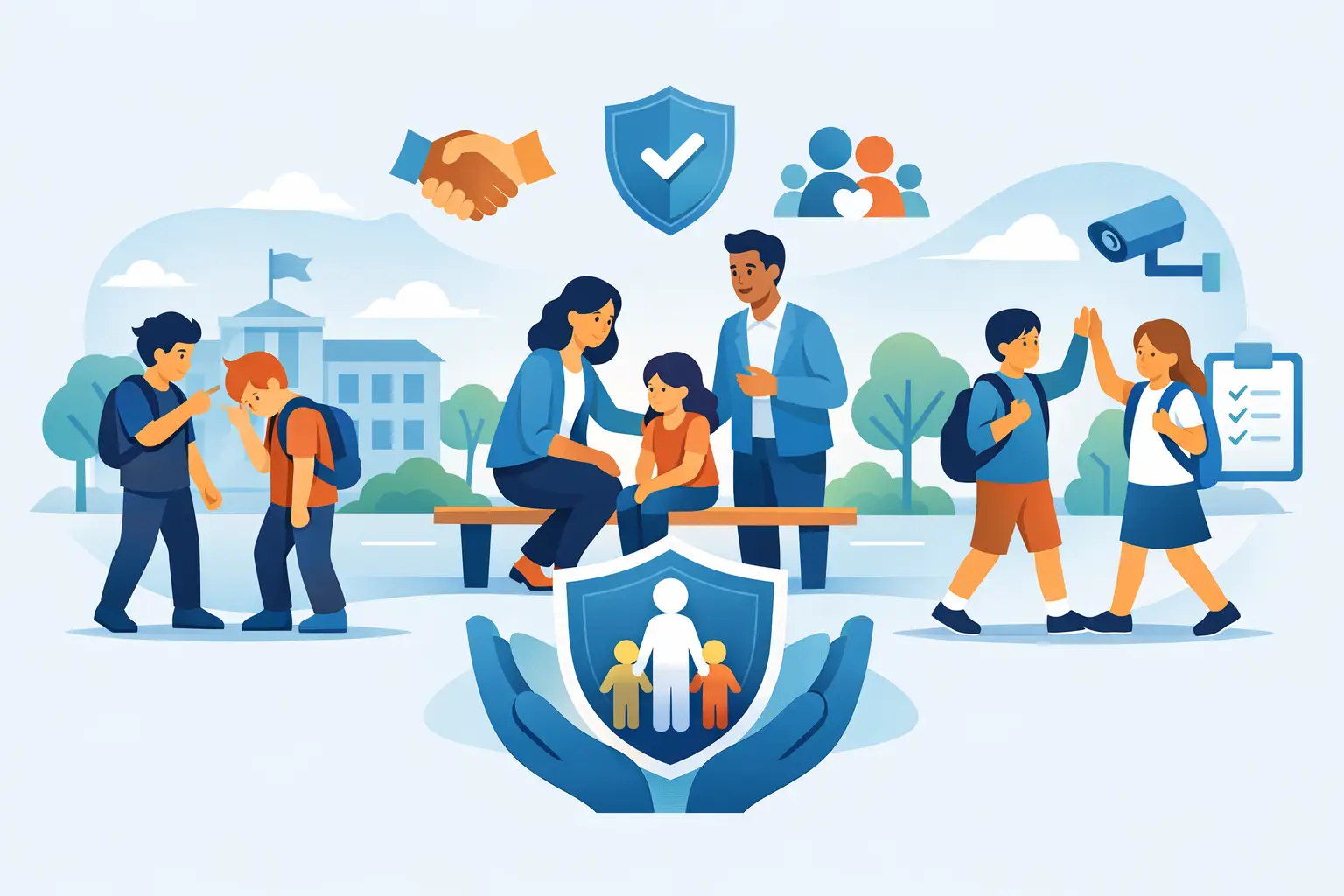
A student who stops raising their hand, skips lunch, or asks to stay home may be signaling a school climate problem long before an adult sees a hallway confrontation. The most effective bullying prevention programs do not wait for a crisis, a disciplinary referral, or a viral post. They create daily conditions where students know they belong, adults know how to respond, and bystanders understand that speaking up is an act of leadership.
For schools, this is not one assembly or a poster campaign. It is a shared commitment that reaches classrooms, buses, athletic teams, online spaces, cafeterias, and conversations at home. Prevention succeeds when the whole community moves from awareness to coordinated action.
What Bullying Prevention Programs Need to Do
A strong program gives a school more than a definition of bullying. It helps students and adults recognize patterns of harm, respond without escalating conflict, and repair trust when harm occurs. It also distinguishes bullying from everyday disagreement.
Conflict usually involves students with relatively equal power who can work through a disagreement with support. Bullying involves unwanted aggressive behavior, a real or perceived power imbalance, and behavior that is repeated or likely to be repeated. That distinction matters. A school should take every concern seriously, but its response should fit what happened and what each student needs.
Effective prevention also addresses more than physical behavior. Exclusion, threats, rumor-spreading, harassment based on identity, and harmful group chats can leave students isolated and afraid. When adults focus only on visible incidents, students learn that quieter forms of harm will be overlooked.
Build a Schoolwide Response, Not a One-Time Event
Assemblies can help start a conversation. They can give students a shared language and remind them that support is available. But an event alone cannot change routines, reporting practices, adult supervision, or peer behavior.
A schoolwide approach begins with clear expectations that students can understand. Students should know what respectful behavior looks like, how to get help, what happens after a report, and who will follow up. Families need the same clarity. Uncertainty can keep students silent, especially when they fear retaliation or believe reporting will make things worse.
Consistency is equally important. A student should receive a caring, informed response whether they speak to a teacher, coach, counselor, bus driver, or principal. That requires staff training that goes beyond telling adults to “watch for bullying.” Adults need opportunities to practice how they will listen, document concerns, protect confidentiality, contact families, and check in after an incident.
Schools should also look honestly at their own data. Discipline referrals alone do not show the full picture because many students never report. Climate surveys, attendance trends, nurse visits, counselor concerns, and student listening sessions can reveal where students feel unsafe or disconnected. The goal is not to collect data for a report. It is to use what students share to improve supervision, instruction, communication, and support.
Give Students a Meaningful Role
Students see social dynamics adults may miss. They know which places feel unsafe, which rumors are spreading, and which peers are being pushed to the margins. Their insight should shape prevention efforts, not appear only after a serious incident.
Student leadership can take many forms: peer ambassadors, advisory discussions, kindness campaigns, restorative projects, and student-led feedback groups. The most meaningful roles give young people a real voice in identifying problems and proposing solutions. A student committee should not be expected to solve bullying on its own, but it can help adults see the school through students’ eyes.
Bystander education deserves special attention. Many students want to help but do not know how without becoming a target themselves. Teach practical options: interrupt a harmful moment when it is safe, refuse to share humiliating content, sit with someone who is isolated, save evidence of online behavior, report concerns to a trusted adult, and check in privately afterward.
Students also need reassurance that getting help is not “snitching.” Reporting is a way to protect people and strengthen the community. When schools respond respectfully and keep students informed about next steps when possible, they build the trust that makes future reporting more likely.
Support Families Before Problems Escalate
Parents and caregivers can spot changes that are not visible at school. A child may become withdrawn, anxious, unusually angry, reluctant to attend school, or suddenly focused on changing routes, activities, or online accounts. These changes do not automatically mean bullying is happening, but they are a reason to ask calm, specific questions.
Families need practical guidance from schools, including who to contact and what information to share. Encourage caregivers to document dates, locations, people involved, screenshots, and changes in behavior. At the same time, remind them that children may need a supportive listener before they need a solution. Statements such as “I believe you,” “You did the right thing by telling me,” and “We will figure out the next step together” can make a powerful difference.
Communication should not begin and end with a complaint. Schools can offer regular family education about digital citizenship, peer conflict, reporting procedures, and ways to help children build empathy and resilience. This is especially important when online conduct affects school relationships. Jurisdiction, policy, and the level of school involvement may vary, but a student’s wellbeing should never be treated as an afterthought.
Respond to Incidents With Care and Accountability
Prevention does not mean bullying will never occur. It means the school is prepared to act early and thoughtfully when it does.
Start by ensuring immediate safety. Listen separately to the students involved, gather facts without assuming intent, and avoid forcing a face-to-face conversation. A quick apology or mediation may seem efficient, but it can be harmful when there is a power imbalance, fear of retaliation, or ongoing harassment. Restorative conversations can be valuable in the right circumstances, but they must be voluntary, carefully facilitated, and paired with real accountability.
The student targeted needs a safety and support plan. That might include check-ins with a trusted adult, changes in seating or supervision, counseling support, a safe route between classes, or a clear plan for reporting new concerns. The student who caused harm also needs an intervention that teaches responsibility, empathy, and better choices. Punishment without skill-building may stop behavior temporarily without changing the conditions that produced it.
Follow-up is where many responses fail. Adults should check in days and weeks later, not simply close the file after the first conversation. Ask whether the behavior has stopped, whether the student feels safe, and whether the plan is working. Students notice when adults keep their word.
Choose Programs That Fit Your Community
There is no single script that works for every school. Elementary students, middle school students, and high school students need different language, examples, and opportunities to participate. A small rural district may need a different delivery model than a large urban campus. Schools serving students across many cultures and identities must make sure prevention messages reflect every student’s dignity and lived experience.
When evaluating a program, school leaders should ask whether it includes staff development, student engagement, family communication, clear reporting pathways, and a plan for measuring progress. Consider whether the program can be reinforced over time rather than delivered once and forgotten. Also ask whether facilitators can connect with students in an honest, age-appropriate way.
A school visit or national tour can create energy and give a community a visible moment to stand together. That energy is most valuable when it supports the work already happening before and after the event: classroom conversations, staff preparation, family outreach, and student leadership. End Bullying Today invites schools and communities to turn that shared moment into sustained action.
Make Belonging a Daily Practice
The strongest prevention work is often found in ordinary moments. It is the teacher who learns every student’s name. The coach who addresses a cruel joke instead of laughing it off. The cafeteria monitor who notices a student eating alone. The principal who communicates clearly after a concern is reported. These actions tell students what the community truly values.
Schools do not have to choose between kindness and accountability. Students deserve both. They deserve adults who set firm boundaries against harm and who believe every young person can learn to contribute to a safer community.
Start with one question: What would change if every student in our school knew that someone would notice, listen, and act? Then invite educators, families, students, and community partners to help make that answer real.