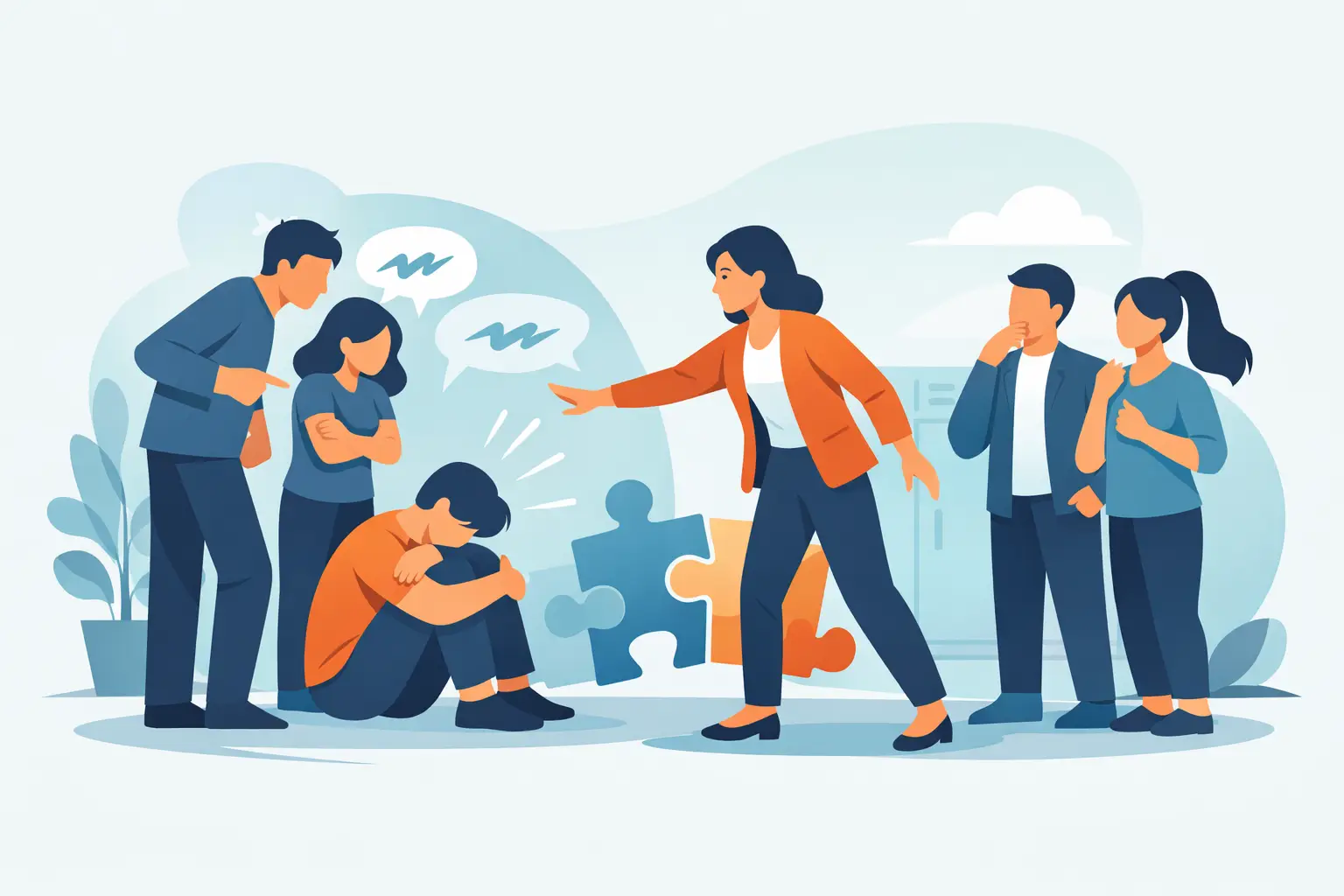
When a student sees a classmate mocked in a group chat, shoved in a hallway, or excluded at lunch, the moment can feel too big to interrupt. Silence may look like approval to the student being harmed and permission to the student causing harm. But students do not need to become heroes alone. They need practical language, trusted adults, and repeated chances to practice safe choices.
Bystander intervention bullying activities give students those chances before a real situation puts them under pressure. Done well, these activities do more than ask young people to “stand up” for one another. They teach students how to recognize harm, decide what is safe, support the targeted student, and bring adults into the response when needed.
Start With Safety, Not Spectacle
A school should never teach intervention as a demand for direct confrontation. A student who steps between peers during a physical incident, challenges a group with more social power, or posts publicly about harassment may face greater risk. The goal is not to create dramatic moments. It is to build a community where students know there are several safe ways to help.
Before leading activities, establish a few clear expectations. Students should not name classmates or retell active incidents during a group exercise. They can use fictional scenarios, and they should know exactly which adults can help during the school day. Make clear that reporting is not “snitching” when someone’s safety, dignity, or access to school is at stake.
It also helps to distinguish conflict from bullying. Conflict generally involves a disagreement between students with relatively equal power. Bullying involves unwanted, repeated behavior or a serious harmful act, often shaped by an imbalance of power. Students do not need legal definitions, but they do need language that helps them identify when a situation calls for adult support.
Five Bystander Intervention Bullying Activities for Schools
The strongest activities are brief, repeatable, and connected to real school routines. A one-time assembly can inspire students, but practice in advisories, classrooms, clubs, and team meetings helps the skills stick.
1. The Pause-and-Choose Scenario Circle
Present a short, age-appropriate scenario. For elementary students, it might involve repeated exclusion from a recess game. For middle or high school students, it could involve a humiliating photo being shared in a group chat. Pause the story at the moment a bystander notices what is happening.
Ask students what they could do next, then sort ideas into safe action choices: distract, support, document when appropriate, report, or directly speak up when it is safe. A student might distract by asking the targeted student to join them elsewhere. They might support by checking in privately: “That was not okay. Want to sit with me?” They might report by telling a counselor, teacher, coach, or administrator.
The value is in discussing trade-offs. Deleting a cruel comment may stop its spread but may also erase information an adult needs to address the situation. Speaking up can be powerful, but it may not be safe when several students are involved. Help students see that more than one response can be responsible.
2. Practice the Words Students Can Actually Use
Students often know bullying is wrong but freeze because they cannot find words quickly. A short role-play can change that. Give pairs or small groups a scenario and invite them to practice one sentence they could say as a bystander.
Useful phrases are simple: “That is not funny.” “Leave them out of this.” “Come with me.” “I am going to get an adult.” “Are you okay?” For online situations, students can practice responses such as, “Do not share that,” or, “I am reporting this because it is harmful.”
Do not require students to perform in front of the class, especially if public speaking causes anxiety or the topic is personally painful. Let groups write responses, practice quietly, or offer a response card. The purpose is confidence, not a polished performance.
3. Map Trusted Adults and Safe Reporting Routes
A reporting plan is only useful if students believe adults will respond. Ask students to identify several trusted adults in the building, not just one. A classroom teacher may be the right person for one student; another may feel safer approaching a counselor, nurse, librarian, bus driver, coach, or assistant principal.
Then walk through what happens after a report. Who listens? What details are helpful? How can a student report if they are worried about being seen? What should they do if the first adult does not understand the urgency? Students should leave knowing they can keep telling trusted adults until they get help.
This activity also gives staff essential feedback. If students cannot name a trusted adult or do not believe reporting changes anything, that is a school climate issue requiring action, not a student motivation problem.
4. Use the “Support After” Walkthrough
Bullying does not end when an adult interrupts the incident. The student targeted may still face isolation, embarrassment, or fear the next day. In this activity, ask students to consider what support looks like after the moment has passed.
They might invite a peer to sit with them, walk together between classes, include them in a group project, or send a kind message that does not pressure them to share details. They can also avoid repeating rumors, forwarding screenshots, or demanding an update about what happened.
This is especially useful because it moves students beyond the idea that intervention means a single brave act. Consistent belonging is prevention. A student who has friends, allies, and adults checking in is less isolated and more likely to seek help early.
5. Rehearse Digital Bystander Choices
Online bullying can travel faster than adults can see it, and students may feel that liking, laughing, or forwarding content is harmless. Use fictional screenshots or written examples, never real student posts, to discuss the role of the digital audience.
Ask students to identify the moment where they can interrupt the harm: before sharing, after receiving, when commenting, or when noticing a peer withdraw. Practice the steps of not engaging with harmful content, saving relevant information when reporting is needed, using platform reporting tools where appropriate, and telling a trusted adult.
Avoid promising students that every online problem can be solved by blocking someone. Blocking can be helpful, but threats, sexual harassment, repeated targeting, impersonation, and content shared widely usually require adult involvement and school follow-up.
Make Practice Part of School Culture
Bystander intervention works best when adults model it. Staff members can calmly interrupt disrespectful language, check on students who have been left out, and follow through when concerns are raised. Students watch whether adults treat reports as an inconvenience or as an opportunity to protect a member of the school community.
School leaders can build these activities into existing spaces rather than adding another isolated program. A five-minute scenario at the start of advisory, a discussion before a team travels, or a digital citizenship lesson before a long break can be enough to reinforce the message. Repetition matters more than a single large event.
Families should be included, too. Parents and caregivers can ask open questions such as, “Did you see anyone having a hard time today?” and “What would make it easier to get help at school?” These questions communicate that witnessing harm matters and that seeking adult help is a sign of care.
Debrief Without Putting Students on the Spot
After every activity, make room for a brief debrief. Ask what felt easy, what felt risky, and which adult supports would make action more likely. Do not ask students to disclose whether they have been bullied or have bullied someone. Participation should build skills, not expose students.
Pay attention to patterns in what students say. If they consistently fear retaliation, schools need clear protections and follow-up. If they say adults minimize online harm, staff may need common response procedures. If students think exclusion is “just drama,” that is an opening to teach how repeated social isolation can damage a student’s sense of safety and belonging.
End Bullying Today encourages schools to turn concern into coordinated action. Bring students, educators, families, and community partners into the work, because each group sees different parts of a young person’s day.
The next time a student witnesses cruelty, they may not have perfect words or complete confidence. What they need is a practiced path: move toward safety, support the person harmed, involve a trusted adult, and refuse to help harm spread. Every student who learns that path helps make school a place where belonging is defended, not left to chance.