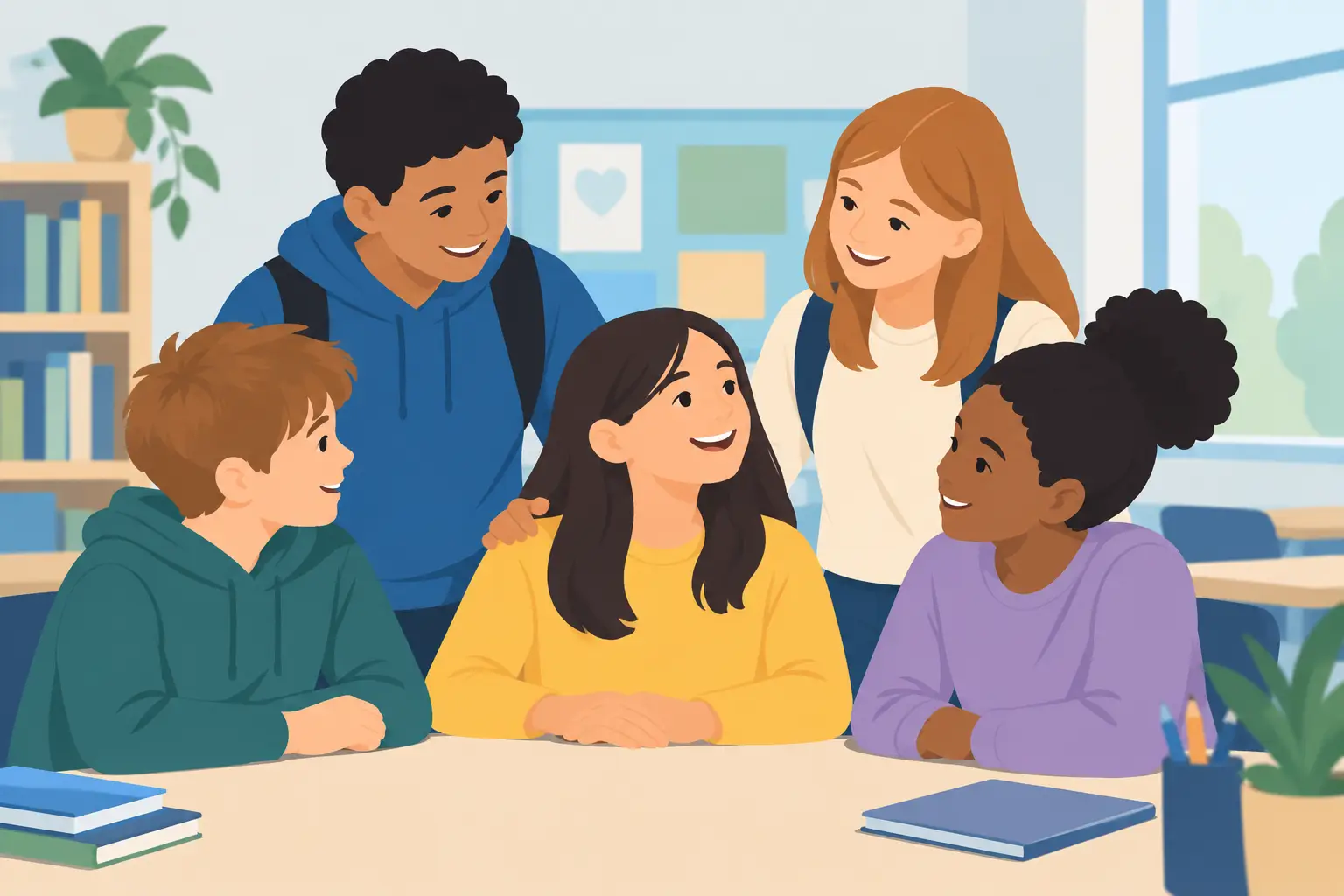
A student can be surrounded by classmates and still feel invisible. That feeling can show up as silence during group work, a seat no one chooses at lunch, repeated absences, or a sudden reluctance to participate. Effective classroom belonging ideas address those moments before isolation becomes a pattern and before bullying has room to grow.
Belonging is not a reward for students who are outgoing, high-achieving, or easy to teach. It is the shared belief that every student is known, respected, and safe enough to participate. For schools committed to preventing bullying, that belief must be visible in daily routines, adult responses, student relationships, and family communication.
Why classroom belonging is a bullying prevention strategy
Bullying thrives where status, exclusion, and silence are allowed to set the social rules. A student who believes adults will not listen, peers will not include them, or reporting will make things worse is less likely to ask for help. Students who feel connected, on the other hand, are more likely to seek support, stand up for a peer, and repair harm when conflict occurs.
Belonging does not mean every student will be friends. It means students understand that dignity is not negotiable. They can disagree, have different interests, and need different kinds of support without becoming targets.
A single spirit week or kindness poster cannot create that culture alone. Consistency matters more than spectacle. The following practices give educators practical ways to make connection part of the school day.
Classroom belonging ideas that students can feel
1. Learn what students want adults to know
Names matter, but knowing a student’s name is only the beginning. Use brief interest surveys, private check-ins, or first-week writing prompts to learn about students’ strengths, interests, worries, pronouns, cultural traditions, and preferred ways of participating.
Then use what students share. Ask about the game they mentioned, offer a book tied to an interest, or invite them into a role that fits a strength. Be careful not to turn personal information into a public spotlight. For some students, being known is reassuring; for others, public attention feels unsafe. Let students decide what is shared with peers.
2. Make greetings predictable and genuine
A calm welcome at the door can tell students that their presence is noticed before the lesson starts. Teachers might greet each student by name, offer a choice of verbal greeting or quiet nod, and watch for changes in mood or routine.
This is not about forcing cheerfulness. A student who walks in upset does not need a demand to smile. They need an adult who communicates, without pressure, “I see you, and you belong here.” A simple private follow-up later can make a meaningful difference.
3. Build participation with more than one pathway
Many classroom routines unintentionally reward the loudest or fastest students. If discussion is the only path to being seen as engaged, students with anxiety, language differences, processing needs, or fear of peer judgment may withdraw.
Offer choices: students can speak, write, draw, use a response card, contribute digitally when appropriate, or share with a partner before speaking to the class. Clear options do not lower expectations. They remove barriers so more students can meet them.
4. Design group work instead of hoping it goes well
Unstructured group work can quickly reveal social hierarchies. The same students may be chosen last, interrupted, given the least meaningful tasks, or left without a partner. That is not a minor inconvenience. It can reinforce the message that some students are less valued.
Create groups intentionally and rotate them over time. Give each student a real role, such as facilitator, recorder, researcher, or checker for understanding. Teach students how to invite ideas, disagree respectfully, and notice when someone is being excluded. Check in with groups while the work is happening, not only after conflict appears.
5. Teach the difference between conflict and bullying
Students need language for what they are experiencing and witnessing. Conflict usually involves a disagreement between people with relatively equal power. Bullying involves unwanted behavior, a power imbalance, and often repetition or the likelihood of repetition. Both require adult attention, but they should not be treated as the same thing.
Use age-appropriate scenarios to practice identifying exclusion, rumors, online harassment, teasing, and bystander behavior. Avoid asking students to disclose personal experiences in front of peers. The goal is to build understanding and show students exactly where they can go for help.
Create routines that protect dignity
6. Correct behavior without humiliating students
Public correction can sometimes become its own form of social punishment. When a student is struggling, redirect the behavior clearly and calmly while preserving their dignity whenever possible. Describe what needs to change, not what the student supposedly is.
For example, “The conversation needs to stop so everyone can work” is more useful than labeling a student as disruptive. Private conversations can address impact, accountability, and next steps without giving peers a reason to laugh or pile on.
This does not mean ignoring harmful behavior. Students need firm boundaries, especially when someone has been targeted. The difference is that accountability should interrupt harm, not model humiliation.
7. Use class agreements that students help shape
A posted list of rules is easy to overlook. A set of shared agreements built with students has more meaning when adults return to it consistently. Ask students what respect looks and sounds like during discussion, group work, transitions, online communication, and disagreement.
Keep the agreements specific. “Include others” becomes more actionable when students name behaviors like making room in a group, using correct names, not forwarding hurtful messages, and telling an adult when someone is being targeted. Revisit the agreements after breaks, schedule changes, or incidents that reveal a need for repair.
8. Make help-seeking private and normal
A student may not report bullying because they fear retaliation, worry they will be dismissed, or do not have the words to explain what happened. Every classroom should have more than one clearly explained route to support: a private note, a check-in form, a trusted staff member, a counselor, or a designated reporting process.
Tell students what happens after they ask for help. They do not need every investigative detail, but they should know adults will listen, document concerns, protect privacy as much as possible, and follow up. When schools communicate this process clearly, reporting becomes an act of courage rather than a gamble.
Help students practice inclusion, not just hear about it
9. Give bystanders a role
Most students are neither the person bullying nor the person targeted. They are the audience, the friend, the group-chat member, or the student who notices something feels wrong. Their choices can either isolate a peer further or disrupt the behavior.
Teach small, realistic actions: refusing to laugh along, changing the subject, sitting with a student who has been excluded, saving evidence of online harm, checking in privately, and reporting to an adult. Students should never be expected to confront a dangerous situation alone. The safest action depends on the setting and the power dynamics involved.
10. Create low-pressure ways to contribute
Not every student wants to lead an assembly or speak in front of a crowd. Schools can create belonging by offering meaningful roles with different levels of visibility. A student may organize materials, welcome a new classmate, help create a classroom display, contribute anonymous ideas, or join a peer-led kindness project.
The key is authenticity. Do not assign marginalized students the job of explaining their identity or representing an entire group. Invite input, compensate attention with respect, and make participation voluntary.
11. Respond to identity-based harm directly
When slurs, stereotypes, or identity-based jokes are minimized as “just kidding,” students learn that safety depends on whether adults think the harm is serious enough. Address the language immediately, name the expectation, support the targeted student, and follow school procedures.
A general reminder to “be nice” is rarely enough. Students need adults to show that racism, antisemitism, anti-LGBTQ+ harassment, religious bias, disability-based ridicule, and other identity-based harm are unacceptable. Families may need communication and support as well, particularly when a pattern is emerging.
12. Repair relationships after harm
A consequence may be necessary, but it is not the whole response. Students also need a plan to restore safety and rebuild trust. Depending on the situation, that may include a private apology, changed seating or supervision, counseling support, a behavior plan, parent or caregiver involvement, and ongoing check-ins.
Restorative conversations can help when the targeted student feels safe and participation is voluntary. They are not appropriate when they pressure a student to forgive, require face-to-face contact, or replace needed consequences. Safety comes first.
Make belonging a schoolwide commitment
Teachers cannot carry this work alone. Administrators can protect time for relationship-building, train staff on consistent responses, review climate data, and ensure students know where to report concerns. Counselors and support staff can identify students who may be withdrawing or repeatedly experiencing peer conflict. Families can reinforce respectful behavior, listen without immediately minimizing a child’s experience, and communicate concerns early.
Schools should also look for patterns. Are certain students repeatedly excluded from group activities? Do reports increase in hallways, buses, locker rooms, or online spaces? Are students from particular identity groups less likely to say they have a trusted adult? Data, student listening sessions, and regular staff collaboration can turn isolated concerns into prevention plans.
End Bullying Today believes safer school communities are built when adults and students act together. Start with one routine your classroom can sustain this week, listen closely to the students it reaches, and keep building from there. Every repeated act of inclusion tells a young person: you do not have to earn your place here.