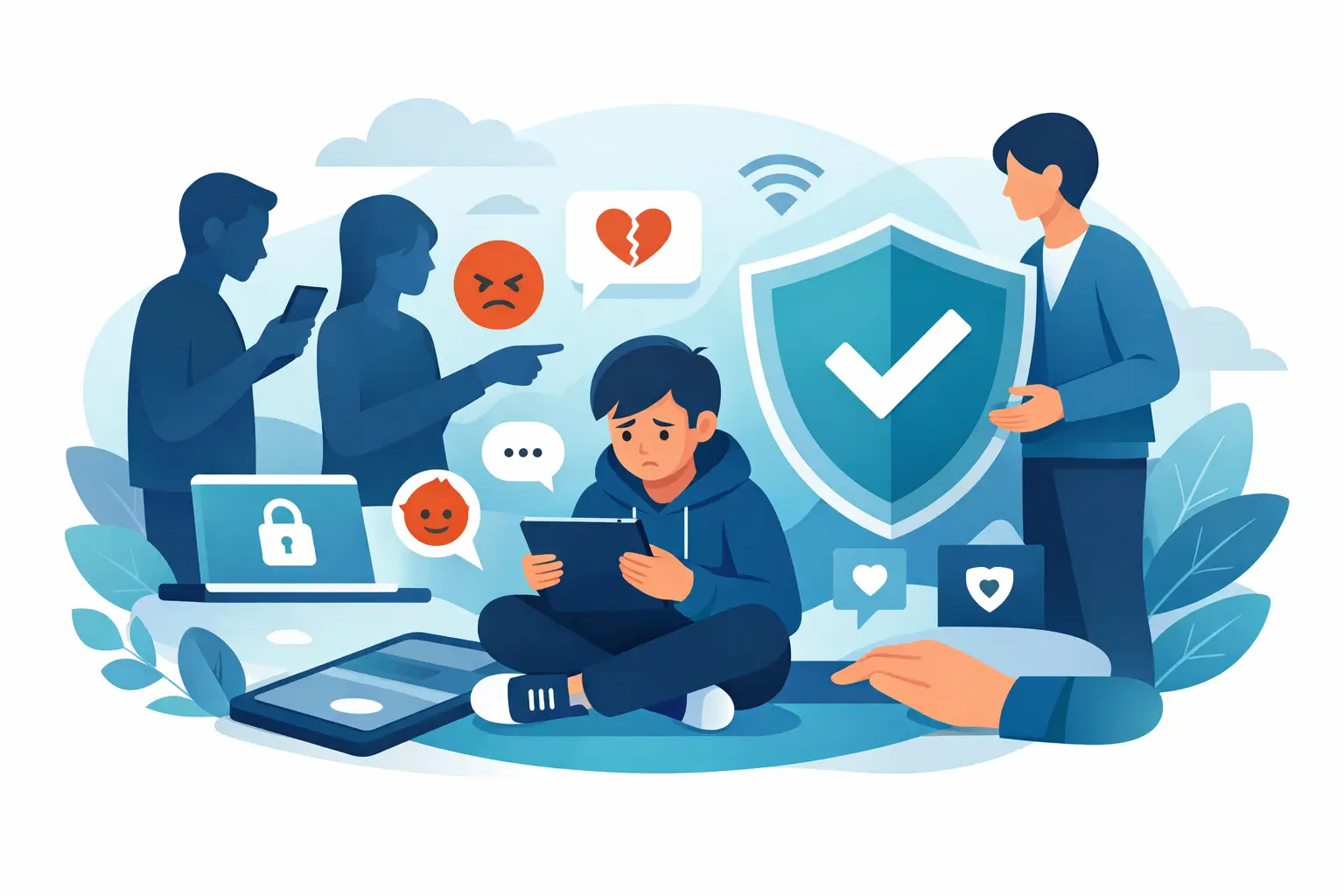
A cruel group chat can follow a student from the bus ride home to the first bell the next morning. A rumor can be reposted before an adult sees it. Cyberbullying prevention for students must meet that reality with more than a one-time assembly or a reminder to be kind. It takes clear expectations, trusted adults, prepared students, and a school community willing to act when harm appears.
Online harm is not separate from school climate. It can affect attendance, concentration, friendships, participation, and a young person’s sense of safety. When students believe adults will minimize what happens online, they stay silent. When schools respond consistently and respectfully, reporting becomes a path to support rather than another risk.
Cyberbullying Prevention for Students Is a Shared Job
Students need practical skills, but they cannot carry prevention alone. The adults who set policies, supervise school spaces, communicate with families, and respond to reports shape whether students feel protected. Prevention works best when schools treat digital behavior as part of their responsibility for student wellbeing, while also recognizing that each situation has its own facts and context.
Cyberbullying can include repeated threats, humiliation, exclusion, impersonation, rumor-spreading, unwanted sharing of images, or attacks based on race, disability, religion, gender identity, sexual orientation, or other parts of a student’s identity. One post may be enough to cause serious harm, especially when it is widely shared or includes threats, private information, or intimate images. The focus should be the impact, the safety concerns, and the behavior that needs to stop - not whether adults think a student should simply ignore it.
A strong prevention approach begins before a crisis. It gives students common language for naming harmful behavior, teaches them how to get help, and makes clear that reporting is an act of care for themselves and others.
Build a School Culture That Does Not Reward Cruelty
Students pay close attention to what gets laughs, likes, attention, and consequences. If a harmful post is treated as gossip, students learn that public humiliation is normal. If adults respond quickly, protect privacy, and address the behavior without shaming the student who reported it, students learn that their community means what it says about respect.
School leaders can make expectations visible in student handbooks, classroom conversations, team agreements, and family communications. Keep the language plain: do not post, forward, screenshot, or encourage content meant to embarrass, threaten, isolate, or expose another person. Students should also understand that off-campus conduct may require a school response when it substantially disrupts learning or creates a safety concern at school.
Consistency matters more than harshness. A response that is fair, timely, and connected to the school’s policies builds trust. Consequences may be necessary, particularly when behavior is repeated or threatening, but discipline alone rarely changes the conditions that allowed harm to spread. Students also need opportunities to repair harm when it is safe and appropriate, learn empathy, and practice better choices.
Make belonging visible
Prevention is stronger when students have real connections to peers and adults. Advisory periods, peer leadership groups, inclusive clubs, mentoring, and classroom routines that invite every voice can reduce the isolation that bullies often exploit. These efforts do not eliminate every incident. They do make it harder for cruelty to become the social currency of a school.
Pay particular attention to students who may be targeted because they are new, perceived as different, disabled, LGBTQ+, from a marginalized community, or socially isolated. Support should never suggest that a student must change who they are to avoid being targeted. The responsibility belongs with the person causing harm and the adults responsible for creating a safe environment.
Teach Students What to Do in the Moment
“Tell an adult” is necessary advice, but students need a clearer plan. In a stressful moment, they may worry that reporting will make things worse, that their phone will be taken away, or that nobody will understand the platform involved. Practice the response before they need it.
Encourage students to pause before replying. Retaliation can spread a conflict and make it harder to sort out what happened. They should save evidence through screenshots, usernames, dates, links or message details, and any information about who saw the content. Then they should use the platform’s reporting and blocking tools when appropriate and tell a trusted adult.
Students who witness cyberbullying have power, too. They should not forward, like, comment on, or laugh at harmful content. They can check in privately with the targeted student, save evidence if asked, report the content, and bring the situation to an adult. A bystander does not have to become an investigator or confront a person who may be dangerous. Their role is to reduce the audience for harm and help connect someone to support.
For students facing threats of violence, stalking, extortion, sexual exploitation, or the sharing of intimate images, the priority is immediate safety. They should tell a trusted adult right away. Schools and families may need to involve law enforcement, child protection professionals, or emergency support depending on the circumstances. Do not promise secrecy when safety is at stake. Promise to stay with the student through the next steps.
Give Adults a Response Plan They Can Use
A report should not depend on whether the first adult a student tells happens to be comfortable with technology. Every staff member needs to know how to receive a concern calmly, document the basics, and connect the student to the right school contact. The first response can determine whether a young person keeps asking for help.
Start by listening without interrogation. Thank the student for speaking up, ask what happened and whether they feel safe, and avoid requiring them to retell the experience repeatedly. Preserve relevant evidence according to district procedures. Notify the staff members responsible for investigation and student support, and communicate with families in a way that protects student privacy.
A school’s response should separate a few questions that are often mistakenly blended together: Is there an immediate safety risk? What conduct occurred? How has it affected the school environment? What support does each student need? This helps teams avoid both extremes - dismissing online behavior because it happened after school, or reacting without enough information.
Counselors, social workers, and trusted educators can help targeted students regain a sense of control. That may include a check-in plan, safe routes between classes, adjustments around shared spaces, academic support after missed work, or help rebuilding peer connections. Students who engaged in harmful behavior also need intervention. Accountability should include teaching, supervision, and family partnership, not just punishment that ends when a suspension does.
Partner With Families Without Turning Support Into Surveillance
Families need honest, practical guidance. Many caregivers know something is wrong only after a student’s mood, sleep, grades, or willingness to attend school changes. Others may see a conflict online and feel pressure to solve it publicly. A coordinated school-family response is usually more effective than competing messages.
Encourage caregivers to create regular, low-pressure conversations about online life. Questions such as “Who do you feel safe talking to online?” or “Has anything happened in a group chat that felt mean or uncomfortable?” can open a door without demanding access to every message. Students deserve age-appropriate privacy, but privacy is not the same as being alone with serious harm.
Families should save evidence, avoid escalating through public posts or direct contact with other students, and report concerns through the school’s established process. They should also know what response timeline to expect and whom to contact if new safety concerns emerge. Clear communication reduces frustration and helps everyone focus on the student rather than the conflict between adults.
Turn Awareness Into Ongoing Action
A poster campaign can start a conversation. It cannot replace training, reliable reporting procedures, and follow-through. Schools should review cyberbullying patterns over time: where incidents begin, which grades need more support, whether students trust reporting systems, and whether targeted groups are experiencing disproportionate harm. Anonymous climate surveys and student listening sessions can reveal problems that discipline data misses.
Prevention should be revisited throughout the year, especially before major transitions, school breaks, and events that intensify group-chat activity. Classroom teachers can reinforce digital citizenship in ordinary moments. Counselors can lead skill-building conversations. Administrators can ensure policies are understood. Students can lead peer campaigns that make inclusion visible and reporting acceptable.
End Bullying Today invites schools, families, students, and community partners to treat this work as a shared commitment, not a task left to the person harmed. Bring the conversation into classrooms, homes, teams, and community spaces. Every student deserves to learn without carrying fear from a screen into the school day.