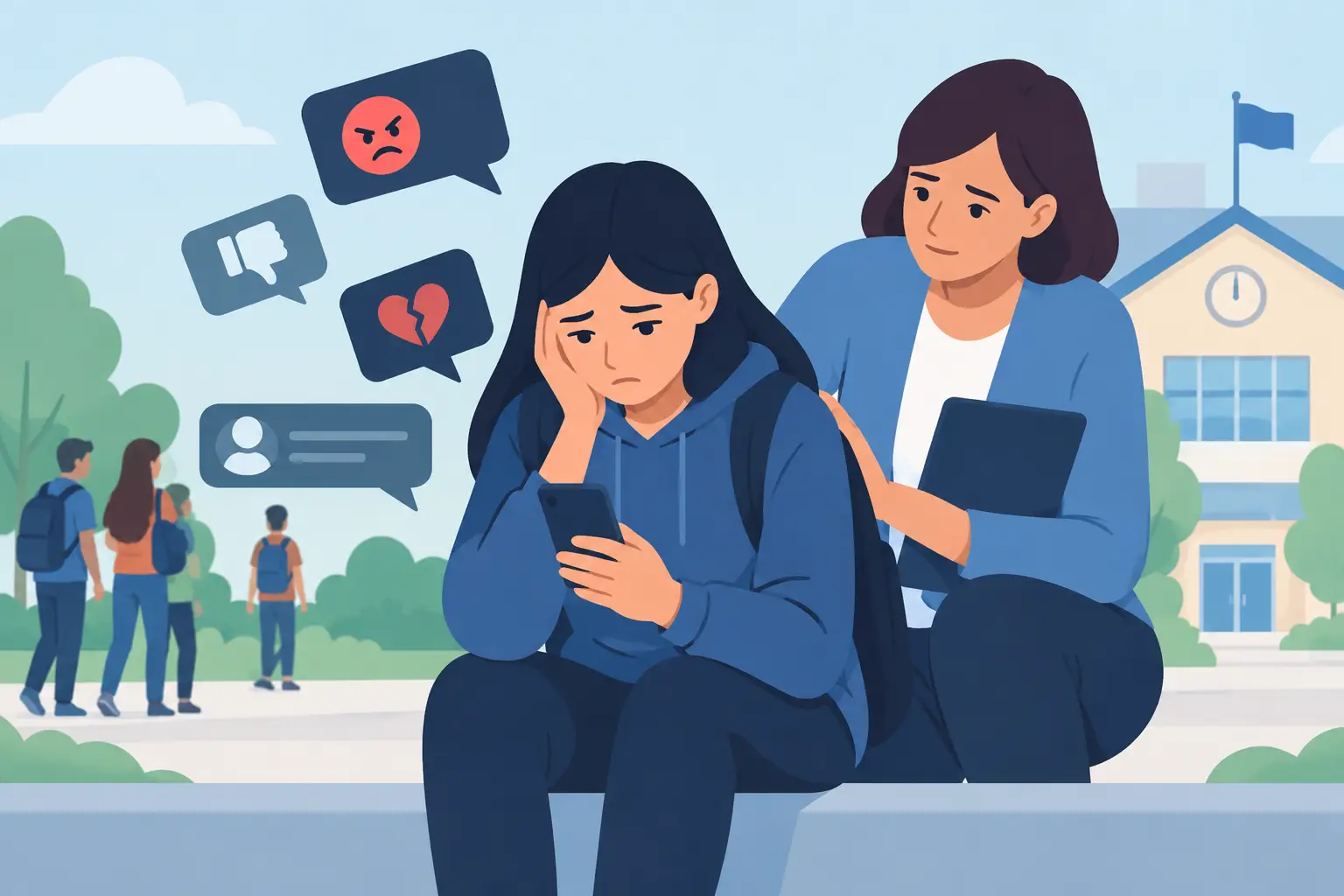
A cruel screenshot can reach a classroom before first period. A rumor that once might have stayed in a hallway can now follow a student home, reappear in a group chat, and be shared again days later. The most urgent cyberbullying trends are not only about new apps. They are about speed, audience size, anonymity, and the way digital harm can leave students feeling there is no safe place to step away.
For schools and families, the response cannot be limited to telling students to “stay off their phones.” Young people need adults who understand how harm moves online, respond without blame, and build a culture where speaking up is safe. Prevention works best when schools, caregivers, students, and community partners treat digital safety as a shared responsibility.
Cyberbullying Trends Schools Need to Watch
Group chats are becoming high-pressure spaces
Many students experience online harm in group texts, direct-message threads, private stories, and gaming chats rather than in public comments. A group chat can turn quickly: one student is excluded, another posts a humiliating image, and others react with laughing emojis, reposts, or silence. Even when only a few students create the content, the audience can make the damage much worse.
These spaces can be difficult for adults to see, especially when students fear that reporting will lead to a phone being taken away or retaliation from peers. Schools should make clear that a student can ask for help without automatically losing access to every digital tool and social connection. Safety planning should be tailored to the situation, the student’s age, and the level of risk.
Harm is increasingly visual, edited, and impersonated
Manipulated photos, fake accounts, altered screenshots, and AI-generated images can make cyberbullying feel especially destabilizing. A student may struggle to convince others that an image is false, or may feel pressure to explain private details to adults just to be believed.
The key lesson for students is simple: do not share, like, save, or amplify suspicious content. For adults, the lesson is to avoid demanding proof in a way that makes a young person relive the harm. Preserve what is needed for a report, but focus first on the student’s immediate wellbeing and safety. If sexual images of a minor are involved, do not forward or redistribute them. Follow district procedures and seek appropriate guidance promptly.
Anonymous accounts lower the barrier to cruelty
Anonymous confession pages and temporary accounts can invite students to post insults, threats, rumors, or personal information they would not say face-to-face. The anonymity may be real, partial, or performative, but the impact on the targeted student is real either way.
Schools should resist the temptation to promise that they can identify every account or remove every post. They often cannot. What they can do is investigate conduct connected to the school community, document reports, address retaliation, support affected students, and set clear expectations for respectful behavior across school-related digital spaces.
Gaming platforms are part of the school climate
For many young people, gaming is friendship, teamwork, competition, and downtime. It can also become a place for slurs, targeted harassment, exclusion from teams, or repeated threats. Dismissing gaming as “just online drama” can miss a major part of a student’s social world.
Ask specific questions: What was said? Who was present? Does the student feel unsafe? Has the behavior moved from a game into school, social media, or daily life? The answers help adults distinguish a one-time conflict from a pattern of targeted harm, while still taking both seriously.
Bystanders have more power than they realize
Cyberbullying often depends on an audience. A cruel post gains force when classmates forward it, comment on it, or watch without interruption. At the same time, students may be afraid to intervene publicly because they worry they will become the next target.
Teach realistic bystander actions. Students can refuse to repost, send a private message of support to the targeted person, save evidence when it is safe, report content through the platform, and tell a trusted adult. They can also interrupt a harmful chat with a simple statement such as, “This is not okay. Stop sharing it.” Not every student can safely confront a bully directly, and they should not be expected to do so alone.
A Better Response Than “Just Block Them”
Blocking and reporting can be useful, but they are not complete solutions. A student may need evidence before blocking. The person causing harm may create a new account. The content may have already spread across several platforms. In some cases, blocking can reduce immediate contact; in others, a coordinated school response is needed.
When a student reports cyberbullying, begin with calm, concrete questions. Ask what happened, where it occurred, who has seen it, whether there are threats, and what the student needs right now. Avoid questions that sound like blame, including “Why did you post that?” or “Why didn’t you just leave the chat?” Students are more likely to seek help again when adults respond with care rather than interrogation.
Documenting matters. Families and schools can save screenshots, usernames, dates, times, and links or platform details when available. Keep records private and limited to people who need them for safety and response. Documentation can help identify patterns, support a platform report, and guide school action.
It also helps to separate conflict from bullying without minimizing either. Conflict generally involves a disagreement between students with relatively equal power. Bullying involves repeated or likely repeated harm, a power imbalance, or targeted behavior that makes a student feel unsafe or excluded. Online situations can change quickly, so a report that begins as conflict may require a different response as more information emerges.
What Schools Can Put in Place Now
A strong cyberbullying response is not a single assembly, a poster, or a policy hidden in a handbook. It is a set of consistent practices that students can recognize and trust.
First, make reporting easy. Students should know several ways to get help: a trusted staff member, counselor, administrator, anonymous reporting process, or designated digital safety contact. Explain what happens after a report is made. Uncertainty is one reason students stay silent.
Second, train staff beyond basic definitions. Teachers, coaches, bus drivers, activity leaders, and support staff need to recognize warning signs such as sudden absences, withdrawal from friends, panic around notifications, declining participation, or repeated requests to leave class. They also need a clear path for escalating concerns without trying to investigate alone.
Third, teach digital citizenship as a lived skill. Students need practice recognizing pile-ons, resisting pressure to share humiliating content, protecting personal information, and repairing harm when they have participated in it. Consequences are sometimes necessary, especially when safety is at risk. But discipline without education can push behavior further underground instead of changing it.
Fourth, involve families early and respectfully. Caregivers may not know which platforms their child uses, or they may feel embarrassed that a problem occurred. Provide plain-language guidance on preserving evidence, monitoring without shaming, talking about privacy, and contacting the school. A parent meeting should feel like a partnership, not a handoff of responsibility.
Finally, protect against overreach. Schools have a duty to address conduct that disrupts learning, threatens safety, or affects students at school. They also need to respect student rights and avoid treating every off-campus disagreement as a disciplinary matter. The right response depends on the content, the students involved, the evidence, and the connection to the school environment. Clear procedures and district guidance help staff act fairly.
Give Students a Role in Prevention
Students notice digital culture before adults do. Invite them to help shape peer-led campaigns, advisory discussions, reporting language, and norms for team chats and school events. Student leadership is most meaningful when young people are given real input, not asked to decorate an adult-created message.
Create room for repair, too. A student who shared a harmful post may need accountability, education, and an opportunity to make amends when it is safe and appropriate. Restorative approaches are not a substitute for protecting targeted students or responding to threats. They can, however, help rebuild trust when all parties are willing and the power imbalance has been addressed.
End Bullying Today believes safer school communities are built through coordinated action, not quiet hope. Schools can bring prevention education directly to their students and staff, while families and community members can volunteer, partner, and speak up for young people who need support.
The next harmful post may be impossible to predict. A student’s confidence that an adult will listen, act, and stay beside them is something every community can build before that moment arrives.