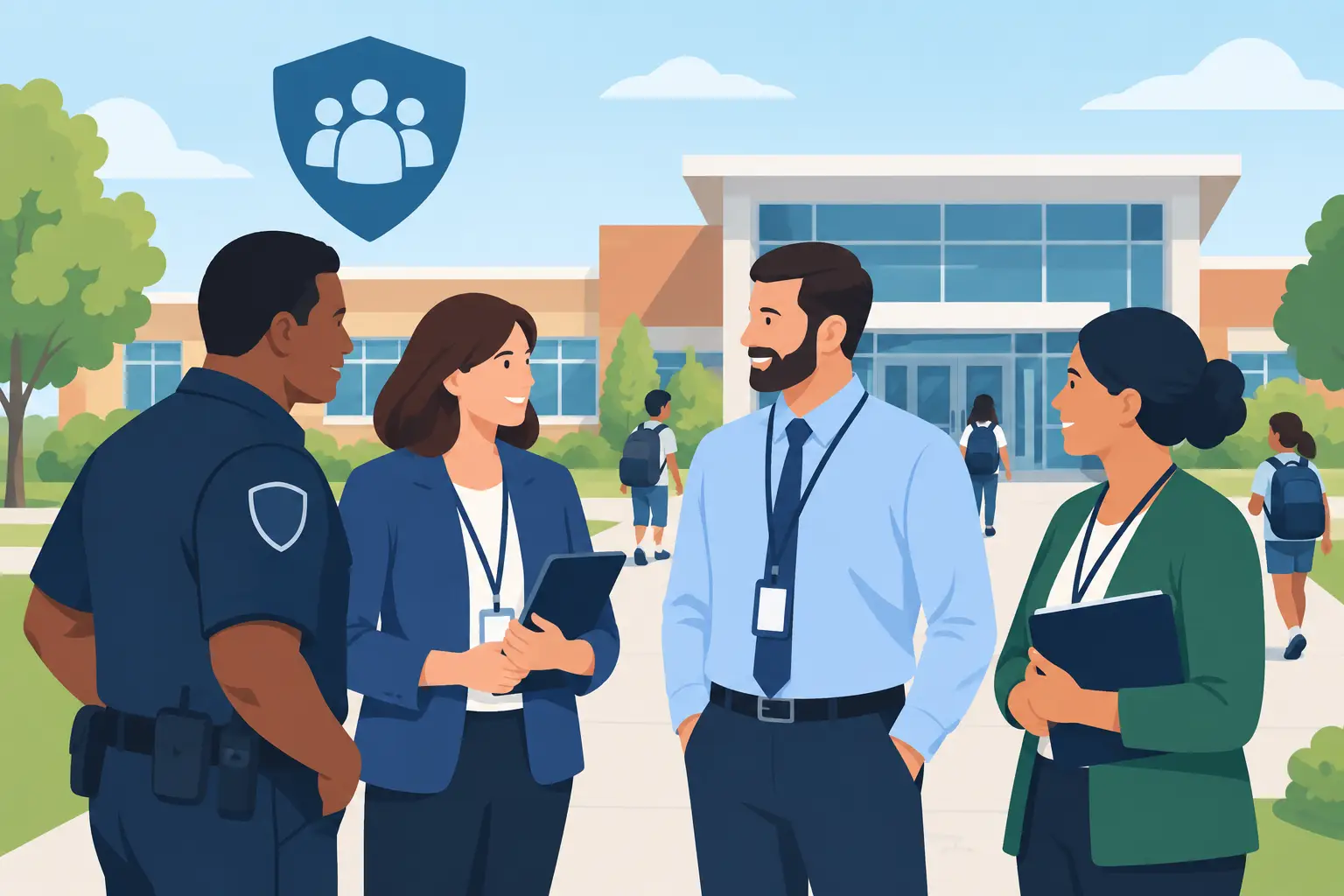
A student reports that classmates have been targeting them in a group chat. Another student has stopped coming to school regularly. A teacher has heard rumors of a threat but does not know whether the information is credible. These moments test more than a school’s policies. They test whether adults can work together quickly, calmly, and with care. This guide for school safety teams focuses on building that capacity before a crisis forces the issue.
School safety is not limited to locks, cameras, drills, or discipline. Those measures can have a place, depending on a school’s needs, but students experience safety through relationships as much as procedures. They need to know that reporting harm will lead to a fair response, that adults will protect their privacy when possible, and that bullying, harassment, threats, and exclusion will not be dismissed as “kids being kids.”
Give the team a clear purpose
A school safety team should not be a group that meets only after a serious incident. Its role is to identify patterns, coordinate prevention, guide responses, and make the school a place where students can ask for help early.
Start by defining what the team owns. In most K-12 settings, that includes bullying prevention and response, school climate data, threat assessment coordination, crisis communication, reporting pathways, and connections to mental health and family support. The team should also understand where its responsibility ends. Individual discipline decisions may rest with administrators, while suspected abuse, discrimination, or imminent threats can trigger district, legal, or law-enforcement requirements.
The team needs decision-makers at the table, not only well-meaning observers. A principal or assistant principal, counselor or social worker, teacher representative, school nurse, school resource officer where applicable, and district support staff can each offer a different view of student needs. Include staff who regularly work with students from different grade levels and communities. If students and families are invited into planning, set expectations for confidentiality and make their participation meaningful rather than symbolic.
A small team often moves faster. A broader network can bring more insight. The right structure depends on school size, district policies, and available staff. What matters is that every member knows who receives reports, who contacts families, who supports affected students, and who follows up after an incident.
Build prevention into everyday school life
Prevention becomes credible when students can see it in classrooms, hallways, buses, athletics, and online spaces connected to school life. An annual assembly or a poster campaign can raise awareness, but neither replaces consistent adult action.
Set a shared definition of bullying that distinguishes it from one-time conflict while still taking all harmful behavior seriously. Bullying generally involves unwanted aggressive behavior, a real or perceived power imbalance, and repetition or the likelihood of repetition. A single cruel act, discriminatory slur, sexual harassment, or threat still requires attention even if it does not meet every element of that definition.
Teach students what to do when they experience or witness harm. “Tell an adult” is only useful when students know which adults are available, how to report privately, and what may happen next. Give them more than one path: a trusted staff member, a written or digital report, a counselor, or an administrator. Anonymous reporting can surface concerns that would otherwise remain hidden, though it can also limit follow-up. Be transparent about that trade-off.
Staff training should focus on recognition and response, not just policy compliance. Adults need practice hearing a report without minimizing it, promising secrecy they cannot keep, or immediately forcing students to face one another. A helpful first response can be as simple as: “Thank you for telling me. You did the right thing. I’m going to get help, and we will talk about what happens next.”
Use data to find what students may not say aloud
Safety teams should review both incident data and climate information. Discipline referrals, attendance changes, nurse visits, counseling referrals, transportation concerns, and reports from students can reveal patterns that a single metric will miss.
Look for questions behind the numbers. Are reports increasing because harm is growing, or because students trust the reporting process more? Are incidents concentrated during lunch, on buses, in a particular grade, or within online group chats? Are students with disabilities, LGBTQ+ students, students of color, new students, or other groups reporting lower belonging or safety? Data should lead to curiosity and action, not labels for students or communities.
Short, regular climate surveys can help the team track whether students know where to get help and whether they believe adults respond. Keep surveys age-appropriate and explain how results will be used. If students share concerns year after year and see no visible change, surveys can damage trust rather than strengthen it.
Respond to reports with care and consistency
When a report arrives, the first job is to assess immediate safety. Is anyone in danger now? Is there a credible threat, access to weapons, serious self-harm concern, retaliation risk, or need for emergency support? Follow district protocols and involve the appropriate professionals without delay when the risk calls for it.
For bullying and peer-harm concerns, separate students before gathering information. Speak with the reporting student, the accused student, witnesses, and relevant staff individually. Preserve available evidence, including screenshots, dates, locations, and exact language when possible. Avoid assuming that the loudest account is the complete account.
Families deserve timely communication, but details about other students must remain protected. Explain the process, the steps being taken to support their child, and when they can expect an update. Do not promise a particular disciplinary outcome before the facts are reviewed.
A fair response may include consequences, but consequences alone rarely solve the problem. The student harmed may need a safety plan, counseling support, class or transportation adjustments, and regular check-ins. The student who caused harm may need clear accountability, supervision, skill-building, and support to address what is driving the behavior. Restorative approaches can be valuable when participation is voluntary, safety is established, and the affected student is not pressured to forgive or reconcile.
Retaliation requires its own attention. Ask directly whether the student fears backlash for reporting. Check in after the initial investigation, especially during the days and weeks when adults may assume the situation has passed.
Make the plan usable under pressure
A safety plan that lives only in a binder will fail when staff need it most. Create simple response protocols for common situations: a bullying report, online harassment, a threat concern, bias-based harassment, a fight, a student in emotional distress, and a parent complaint. Staff should know whom to call, what to document, and what not to do.
Practice the plan through short scenarios during staff meetings. Ask: What would happen if a sixth grader reports harassment after dismissal? What if the concern began off campus but is disrupting learning at school? What if a parent posts allegations online before the school has completed its review? These conversations reveal gaps without waiting for a real student to pay the price.
Communication matters during difficult events. Use plain language, avoid speculation, and share only what families need to know. A school can acknowledge concern and explain its commitment to safety without releasing private student information. Consistent communication protects both trust and due process.
Bring the whole community into the work
School safety cannot rest on a counselor, principal, or one annual program. Teachers need classroom strategies. Families need clear guidance on reporting and supporting children. Students need real leadership opportunities. Community partners can extend access to mental health care, mentoring, conflict resolution, and practical resources.
Invite students to help identify where they feel unsafe and what would make reporting easier. Their answers may be uncomfortable, and that is useful. Adults cannot solve problems they refuse to see. Student-led kindness campaigns, peer support initiatives, and bystander education can help, but students should never be asked to manage serious harm on their own.
Schools can also strengthen their work by bringing in experienced prevention partners. End Bullying Today supports school communities with education and action that helps move anti-bullying commitments beyond a slogan and into shared practice.
A strong safety team does not promise that conflict will disappear. It promises something more honest: every report will be taken seriously, every student will be treated with dignity, and the adults in the building will keep showing up for a safer school community.