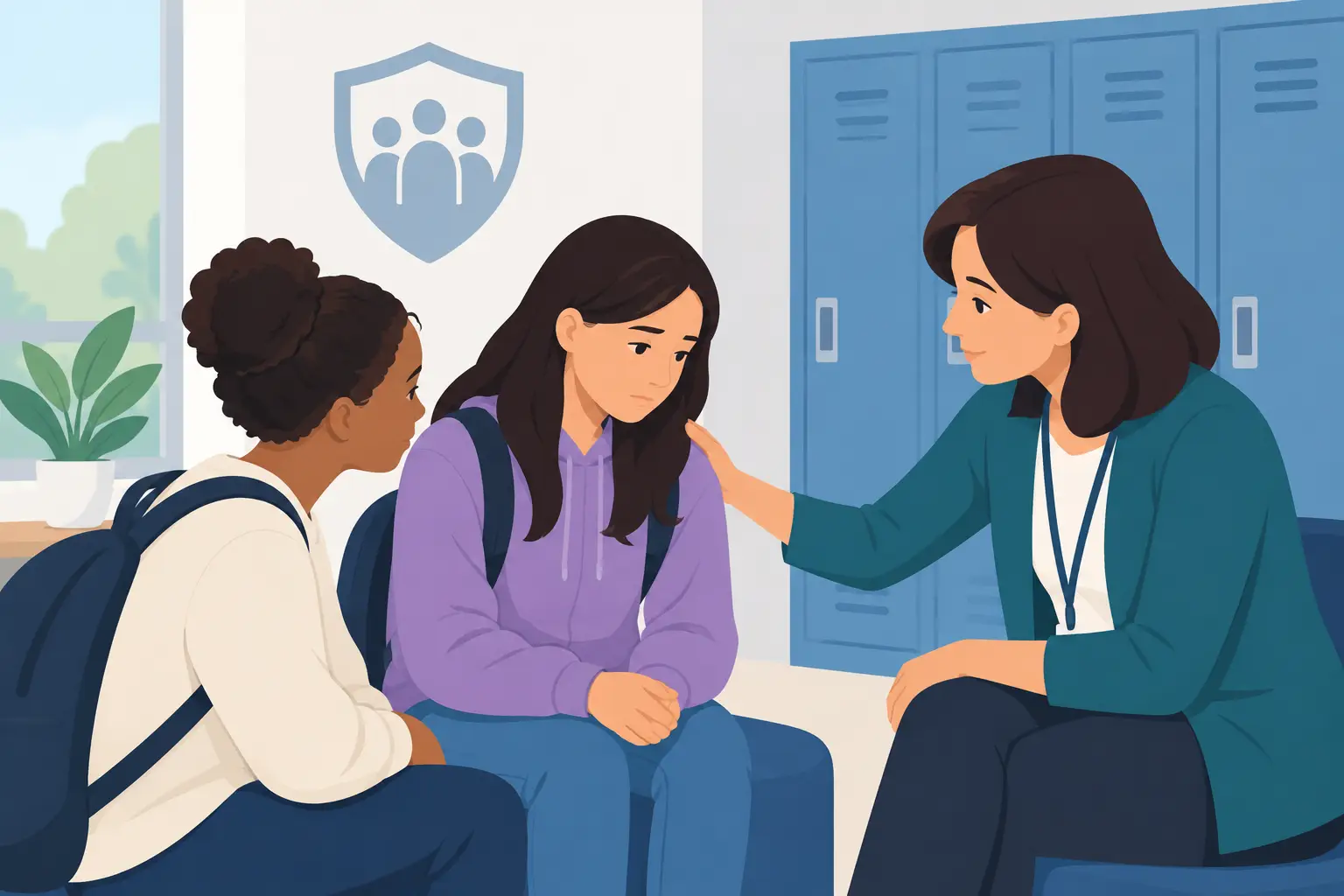
A student who stops raising their hand, avoids the cafeteria, or asks to stay home may be signaling more than a difficult day. When harm is happening, the question of how schools respond to harassment becomes immediate: Will the student be believed, protected, and supported before the situation grows worse?
A strong response is not a single meeting, a scripted apology, or a poster in the hallway. It is a coordinated effort to stop harmful behavior, understand what happened, protect every student’s access to learning, and build a school community where students know they can speak up.
How Schools Respond to Harassment Starts With Listening
The first adult a student tells can shape everything that follows. Teachers, bus drivers, coaches, office staff, counselors, and administrators should respond calmly and take the report seriously. That means listening without demanding that a student prove their experience on the spot or asking, “What did you do to cause it?”
Students may use words such as bullying, teasing, drama, discrimination, threats, or harassment interchangeably. Staff do not need to settle the label before offering support. They do need to document what was reported, identify any immediate safety concerns, and explain the next step in language the student can understand.
A helpful initial response sounds like: “Thank you for telling me. You did the right thing. I am going to make sure the right people know so we can help keep you safe.” That reassurance should be followed by action, not left as a promise.
Schools also need more than one reporting path. A student may not feel safe telling a classroom teacher if that teacher is connected to the situation or if peers are watching. Private conversations, trusted staff members, counselors, written reports, anonymous options, and clear parent contact channels make it more likely that concerns will surface early.
Immediate Safety Comes Before a Full Investigation
A school should assess whether a student faces an immediate risk of physical harm, retaliation, continued online targeting, or emotional crisis. If so, safety planning cannot wait until every detail is confirmed.
The plan will depend on the circumstances. It may include increased adult supervision, a safe place to go during unstructured time, adjusted seating, a check-in person, changes to transportation routines, or support with preserving harmful messages and posts. The goal is not to isolate the student who reported harm or quietly force them to change their entire day. Whenever possible, the burden of adjustment should not fall on the targeted student alone.
Schools must also consider whether the reported conduct involves protected characteristics such as race, color, national origin, sex, disability, religion, or other categories covered by applicable federal, state, or local protections. Harassment that limits a student’s ability to participate in school may trigger additional civil rights responsibilities. District policies and procedures matter, and school leaders should involve the appropriate designated staff promptly.
A Fair Investigation Needs Care and Timeliness
Families often want an immediate answer, while a fair process takes time. Schools can honor both needs by acting quickly to protect students and communicate next steps, even when the investigation is still underway.
A thorough review usually includes separate conversations with the student who reported the concern, the student alleged to have caused harm, and relevant witnesses. Staff should gather available evidence, which might include messages, screenshots, videos, prior reports, supervision notes, or patterns of conduct. Interviews should be private and age-appropriate. Publicly questioning students, requiring them to confront one another, or asking them to mediate serious harassment can deepen the harm.
Confidentiality has limits in a school setting. Families deserve to know that the concern is being addressed, but they may not receive every detail about another student’s discipline or private records. Leaders should explain those limits plainly instead of using confidentiality as a reason to offer no meaningful update.
The investigation should avoid assumptions. A popular student can cause harm. A student with a history of behavior concerns can still be targeted. A conflict between students can include an imbalance of power. Context matters, but it should never become an excuse to minimize repeated cruelty, slurs, sexual comments, threats, exclusion, or retaliation.
Accountability Must Teach, Repair, and Protect
Consequences are sometimes necessary, especially when conduct is severe, repeated, discriminatory, threatening, or retaliatory. But discipline alone rarely changes the conditions that allowed harassment to take hold. Effective accountability combines clear boundaries with education, skill-building, and follow-through.
The response may involve behavior interventions, counseling, restorative practices when appropriate and voluntary, social-emotional skill development, and conversations with caregivers. Restorative approaches can help repair harm, but they are not right for every situation. They should never pressure a targeted student to forgive, meet with the person who harmed them, or carry responsibility for restoring the relationship.
Adults should also look beyond the two students at the center of a report. Were peers laughing, forwarding posts, filming an incident, or staying silent because they feared becoming the next target? Did inadequate supervision create an opening for harm? Are staff members applying rules consistently? Addressing the wider environment is how schools prevent the same behavior from simply moving to another hallway, group chat, or bus route.
Communication Builds Trust With Families
When a child reports harassment, caregivers need to know who is handling the concern, what immediate supports are in place, and when they can expect an update. A timely call can prevent understandable frustration from becoming distrust.
School staff should communicate with empathy and avoid promising a particular outcome before reviewing the facts. They can say what the school is doing, invite relevant information from home, and explain how the family can report new incidents. If the situation affects the student’s attendance, learning, or well-being, the team should discuss practical supports rather than treating those impacts as separate issues.
Follow-up is essential. A problem is not resolved because the initial report has been closed. Brief check-ins in the days and weeks afterward can reveal retaliation, continued online behavior, or a student who is still avoiding school spaces. Students need to see that adults remain present after the first conversation.
Prevention Makes the Response Stronger
Schools respond best when prevention is already part of the culture. Students should know the behavioral expectations, understand how to report concerns, and see adults address disrespect consistently. Staff need training that goes beyond identifying obvious physical bullying. Social exclusion, digital harassment, sexual harassment, biased language, and retaliation can be quieter, but their impact can be just as serious.
Prevention also works when students have a real role. Peer leadership, bystander education, student-led campaigns, and opportunities to shape school-climate efforts help turn students from silent witnesses into active community members. The message should be clear: getting help is not tattling when someone’s safety, dignity, or access to education is at stake.
A schoolwide program can create momentum, particularly when it brings students, educators, and families into the same conversation. End Bullying Today encourages schools to turn awareness into shared action through education, community participation, and direct engagement with young people.
What Every Adult Can Do Next
A student may only tell one person. Make sure that person is ready. Review reporting procedures with staff, make support contacts visible to students, and ask whether current practices protect students from retaliation as well as the original harm. Families can document concerns, save relevant evidence, and continue asking for a clear plan. Students can tell a trusted adult, stay connected to supportive peers, and report new incidents even if they worry they are repeating themselves.
Every report is an opportunity to show students what their community stands for. When adults respond with urgency, fairness, and sustained care, they do more than address one incident. They help create a school where every young person has room to learn, belong, and speak without fear.