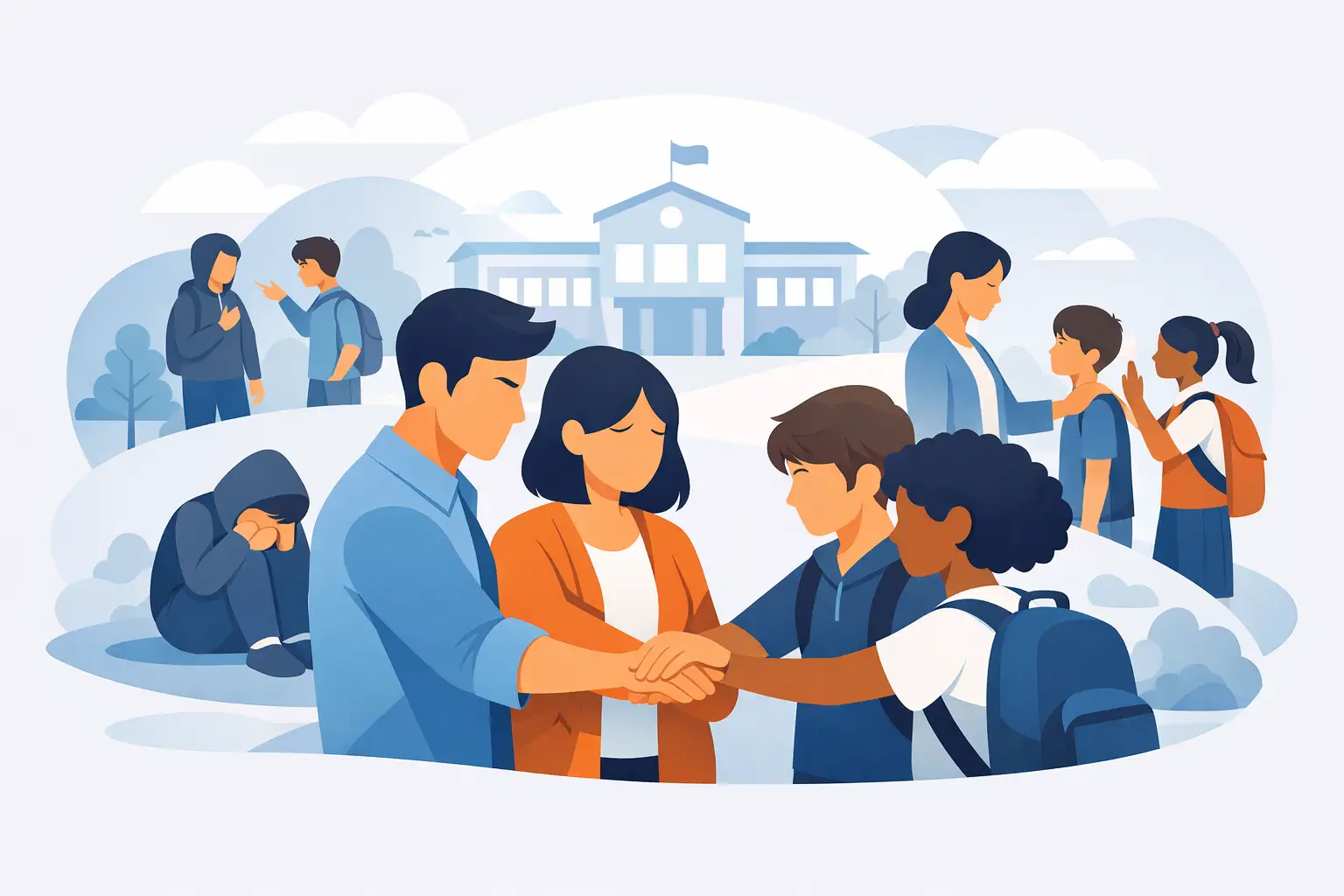
A student who avoids the cafeteria, changes their route between classes, or suddenly asks to stay home is communicating something, even when they do not use the word “bullying.” The question of how to stop bullying at school starts there: with adults and peers noticing changes, responding promptly, and refusing to let harm become part of a student’s daily routine.
Bullying is not solved by a poster, a single assembly, or a rule read aloud at the start of the year. Those efforts can help, but lasting prevention requires a coordinated response from school leaders, educators, students, families, and the wider community. Every person who shapes a young person’s school day has a role in making safety, belonging, and accountability real.
Start by recognizing what bullying is
Not every disagreement is bullying. Students can have conflict with friends, misunderstand a comment, or argue over a game. Those situations still deserve guidance, but bullying has a different pattern: it involves unwanted harmful behavior, a real or perceived imbalance of power, and repetition or the likelihood that it will continue.
That power may come from popularity, age, physical size, social influence, a group chat, private information, disability, race, religion, gender identity, sexual orientation, or access to embarrassing photos and videos. It can be physical, verbal, social, or digital. A student does not need visible injuries for the impact to be serious.
Schools should avoid minimizing reports as “drama” or telling students to simply ignore cruelty. Ignoring a one-time rude comment may be a reasonable coping choice in some circumstances. Ignoring a sustained campaign of exclusion, threats, slurs, rumor-spreading, or online harassment leaves the targeted student carrying a problem adults are responsible for addressing.
How to stop bullying at school with a clear response
A student who reports bullying is taking a risk. They may fear retaliation, social consequences, or being labeled a tattletale. The first adult response matters enormously. Thank the student for speaking up, listen without demanding a perfect timeline, and explain what will happen next.
Immediate safety comes first. If there is a threat, physical harm, sexual harassment, hate-based harassment, or risk of self-harm, follow district safety procedures without delay. Separate students when needed, increase supervision in locations where incidents occur, and ensure the student knows which adults they can approach that day.
Then document the report. Record dates, locations, witnesses, exact language where possible, screenshots or other digital evidence, and previous concerns. Documentation is not bureaucracy for its own sake. It helps schools identify patterns that a single incident report may miss, including repeated targeting in hallways, on buses, in locker rooms, or after school online.
Investigate promptly and privately. Speak with the students involved and relevant witnesses separately. Avoid requiring the targeted student to confront the student who harmed them as a condition of being heard. Restorative conversations can be useful only when safety is established, participation is voluntary, and the process is facilitated by trained adults. Forced apologies or forced face-to-face meetings can deepen harm.
Consequences should be consistent with school policy and proportional to the behavior, but discipline alone is rarely enough. The student engaging in bullying behavior also needs intervention: clear limits, skill-building, adult monitoring, and support that addresses the behavior without excusing it. Accountability and support belong together.
Build prevention into the ordinary school day
Bullying grows where supervision is thin, expectations are vague, and students believe adults will not act. Prevention works best when it is part of the school climate, not an annual event.
School leaders can begin with a practical review of where and when students feel least safe. Ask students directly about buses, bathrooms, lunch periods, locker rooms, playgrounds, stairwells, online spaces, and transitions between classes. The answer will differ by school. A middle school may need stronger support during lunch and group chats, while an elementary school may need more active playground supervision.
Adults should use shared language about respectful behavior and reporting. Students need to know what conduct crosses the line, how to report it, which reports can be made confidentially, and what follow-up they can expect. A reporting process that exists only in a handbook is not enough. Make it visible, repeat it often, and ensure students can access it without having to navigate a public office or explain everything in front of peers.
Classroom routines matter, too. Teachers can interrupt put-downs, exclusion, stereotype-based jokes, and casual humiliation before they become normalized. This does not require a speech every time. A calm, direct response - “We do not talk about classmates that way. Reset.” - signals that dignity is a daily expectation.
Schools also need data. Review behavior reports, attendance changes, nurse visits, counseling referrals, climate surveys, and student feedback for patterns. Data should guide action, not become a reason to wait. If students consistently identify one area as unsafe, adjust supervision and revisit the plan quickly.
Give students a real role without making them responsible for safety
Students often see bullying before adults do. They hear the group-chat messages, see who is being left out, and understand social dynamics that may not appear in an incident report. Their perspective should shape prevention efforts.
Teach students safe ways to move from bystander to upstander. They can refuse to laugh or share harmful content, check in privately with a targeted student, save evidence, report concerns to a trusted adult, and invite someone into a group or activity. The right choice depends on the situation. Students should never be expected to physically intervene or put themselves at risk.
Student leadership groups, peer ambassadors, and inclusion campaigns can make belonging visible. Their value depends on adult follow-through. If students promote kindness while reports go unanswered, the message loses credibility. Invite students to help identify barriers to reporting and to develop solutions, then show them what changed because they spoke up.
Partner with families early and respectfully
Families are essential partners, particularly when a child’s behavior shifts at home. Parents and caregivers may notice lost sleep, anxiety, unexplained injuries, sudden isolation, damaged belongings, or reluctance to attend school. They need a clear route to share concerns and receive a response.
When families report bullying, school staff should listen, document the concern, explain the next steps, and provide a realistic timeline for follow-up. Privacy rules may limit what the school can disclose about another student’s discipline. They do not prevent staff from communicating the safety measures, supports, and ongoing monitoring being provided to the reporting student.
Families can help children preserve evidence rather than respond publicly online. They can practice simple reporting language, identify trusted adults, and reinforce that seeking help is not weakness. At the same time, adults should resist the urge to contact the other child or family directly in anger. That can intensify conflict and complicate the school’s ability to respond fairly.
Make digital bullying part of the school’s plan
Online harm does not stay online when it affects a student’s ability to learn, feel safe, or participate at school. Rumors, impersonation, exclusion, threats, and the sharing of images can follow students from their bedrooms to first period.
Teach digital citizenship as a responsibility to real people, not merely a list of internet rules. Students should understand that forwarding a humiliating post extends the harm, even if they did not create it. They should also know how to capture evidence, block accounts, use platform reporting tools, and bring serious concerns to an adult.
School authority over off-campus speech can depend on the facts and applicable law, so leaders should follow district policy and seek appropriate guidance. The central obligation remains clear: when online behavior disrupts learning or threatens student safety, the school cannot treat its impact as someone else’s problem.
Turn concern into a community commitment
Bullying prevention is stronger when students see that the adults around them are aligned. Counselors, teachers, coaches, bus drivers, cafeteria teams, families, local organizations, and community leaders all reinforce the same message: every student deserves to learn without fear of humiliation or harm.
Professional learning can help staff recognize less visible forms of bullying, respond without bias, and support students who have been targeted because of identity or difference. Schools can also bring in focused programming that gives students a shared language and gives adults concrete next steps. End Bullying Today’s school tour is one way communities can turn a public commitment into a broader conversation and sustained action.
The work is demanding because it asks adults to be consistent, not just concerned. But a student’s sense of safety can change when one report is believed, one hallway is better supervised, one harmful pattern is interrupted, and one peer decides not to join in. Start there today. Make the next student who asks for help feel that the whole community is ready to stand with them.