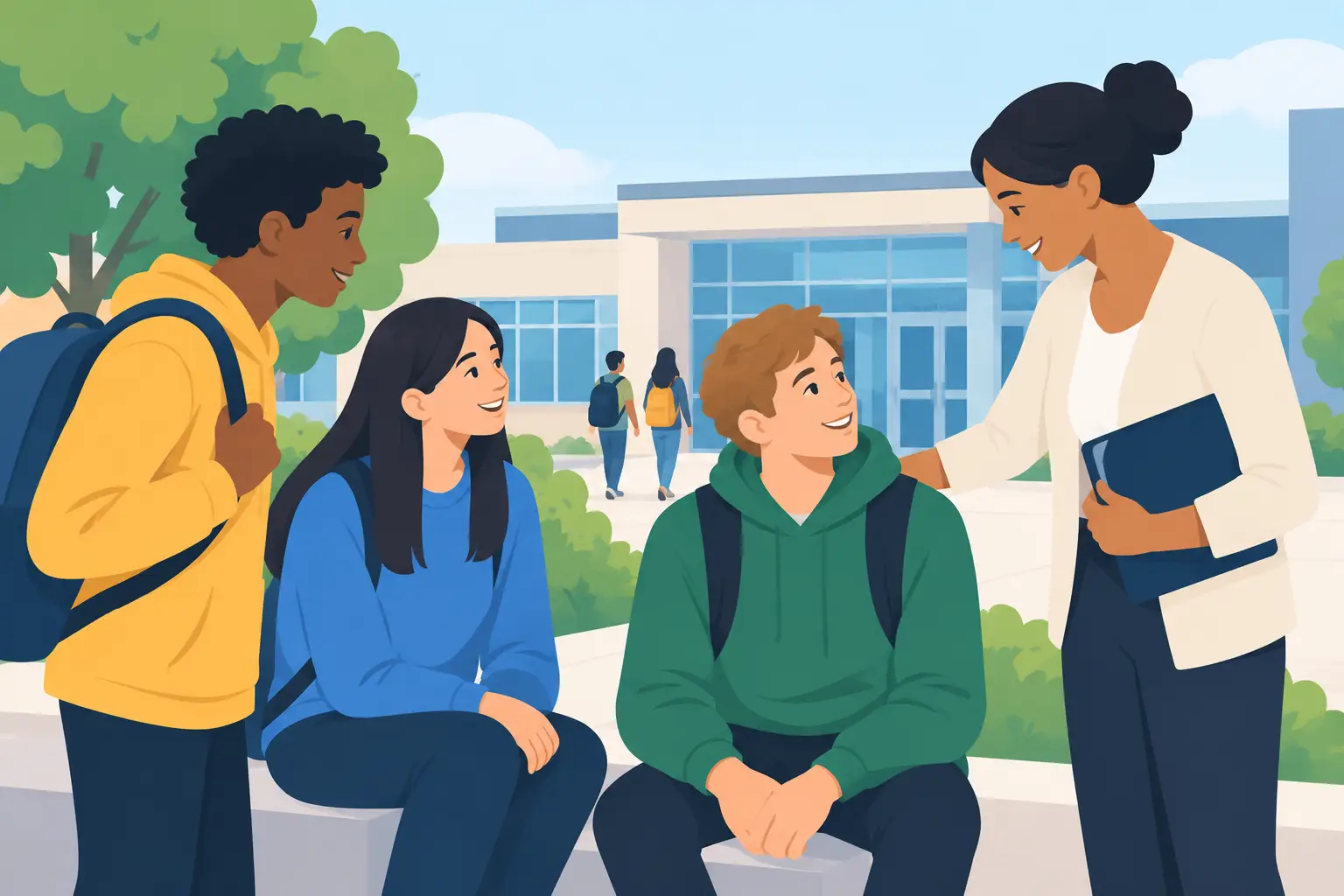
A student who eats lunch alone every day may not tell an adult they feel excluded. A student who stops raising their hand may not have the words for why. School belonging is often visible first in the small moments: who gets greeted, who gets invited into a group, whose name adults know, and whether a student believes someone will step in when harm happens.
Belonging is not a reward students earn by fitting in. It is a condition schools build so every young person can learn, participate, and grow without having to hide who they are. That work is central to bullying prevention because isolation gives bullying room to take hold. Connection makes it easier for students to ask for help, for peers to speak up, and for adults to recognize concerns before they become crises.
What School Belonging Looks Like
School belonging means a student feels accepted, respected, included, and supported by the people around them. It does not mean every student has the same friends, agrees with every school decision, or feels happy every day. Students can have difficult days and still know they matter to their school community.
In a school with a strong sense of belonging, students see adults respond to concerns consistently. They hear their names used with care. They have opportunities to contribute, whether through class discussion, student leadership, athletics, arts, clubs, service, or quieter forms of participation. They understand that differences in race, culture, religion, disability, gender identity, family structure, language, and interests are not reasons to be pushed aside.
For school leaders, this is not just a climate goal that lives on a poster. A student who feels disconnected may avoid school, withdraw from peers, struggle to focus, or become more vulnerable to bullying. A student who feels known is more likely to engage, report harm, and recover when conflict occurs.
Why Belonging Is a Bullying Prevention Issue
Bullying is not simply a conflict between two students. It often depends on an audience, a power imbalance, repeated behavior, and a social environment that allows exclusion or cruelty to go unchallenged. When students believe no one will notice or care, harmful behavior can become normalized.
Building school belonging changes that environment. It creates clearer expectations: students deserve dignity, peers have a responsibility to include rather than isolate, and adults must respond rather than dismiss. It also gives students more than one trusted pathway to support. A child may not report bullying to a teacher, but they may tell a coach, bus driver, counselor, front-office staff member, or parent.
This is why one annual assembly, while potentially meaningful, cannot carry the whole effort. Awareness matters. Daily practice matters more. Students notice whether adults intervene when someone is mocked in the hallway, whether group work leaves the same child out, and whether discipline is fair and understandable.
Belonging Cannot Mean Forced Friendship
Schools should not pressure students to be friends with everyone. Healthy belonging is about safety, respect, and access to community, not forced closeness. Students need the freedom to choose friendships while learning that exclusion, humiliation, and harassment are unacceptable.
The balance matters. A student may prefer quiet spaces or a small circle of friends and still feel connected to school. Adults should look for patterns of distress, avoidance, or isolation rather than assuming that every student who spends time alone is being bullied. Ask, listen, and avoid making assumptions.
Build Belonging Through Daily Routines
The strongest climate work is often practical and repeatable. It is built into arrival, classroom instruction, lunch, transitions, extracurriculars, and the ride home.
Start with adult connection. Each student should be able to identify at least one adult at school who knows them, listens to them, and will follow through. Advisory periods, check-ins, mentoring, and classroom greetings can help, but consistency is what gives these practices meaning. A quick “How are you?” becomes powerful when an adult notices the answer and remembers what the student shared yesterday.
Then examine the places where exclusion is most likely to happen. Cafeterias, buses, locker rooms, group projects, online class spaces, and changing rooms may need more intentional supervision and clearer expectations. Adults do not need to control every interaction. They do need to be present, approachable, and prepared to address harmful behavior early.
Schools can strengthen daily belonging by taking four concrete actions:
- Teach students how to include others, interrupt rumors, and get adult help without escalating conflict.
- Use classroom structures that prevent the same students from being consistently overlooked in groups and discussions.
- Create multiple ways for students to share concerns, including private reporting options and trusted adult check-ins.
- Follow up after incidents so students know reporting led to care, accountability, and continued attention.
Follow-up is especially important. A student who reports bullying and never hears from an adult again may decide that speaking up is pointless. Privacy limits what schools can share about another student, but staff can still say: “We took your concern seriously. We are checking in. Please tell us if anything continues.”
Listen Before You Launch Another Program
No two school communities have the same barriers to belonging. A large high school may need to focus on helping ninth graders find connection. An elementary school may see repeated exclusion during recess. A district may need to examine whether students from particular backgrounds experience discipline, access, or support differently.
Before selecting an initiative, ask students what belonging feels like in their building. Ask where they feel safest, where they feel invisible, and which adults they trust. Families can offer another essential perspective, particularly when a child’s behavior changes at home. Teachers and support staff can identify patterns that may not appear in a survey alone.
Listening must lead to visible action. If students say the bus is a problem, review supervision and reporting there. If they say adults dismiss jokes that target identity, provide staff guidance and make expectations clear. When schools collect student feedback but never discuss what changed, trust can erode.
Data can help, but numbers are only a starting point. Attendance trends, discipline referrals, counseling visits, climate surveys, and bullying reports may reveal where more support is needed. They should be interpreted carefully. A rise in reports can mean bullying is increasing, but it can also mean students are more willing to come forward. Context and follow-up matter.
Every Adult Has a Role in School Belonging
Belonging should not rest solely on counselors or a small student-support team. Principals set the expectation that respect and safety are nonnegotiable. Teachers shape the daily tone of classrooms. Cafeteria staff, transportation teams, coaches, office staff, and volunteers often see students in moments others miss.
Families are partners, not spectators. Caregivers can ask specific questions instead of relying on “How was school?” Try asking who a child sat with, whether they felt included in an activity, or if they saw someone being treated unfairly. If a child shares a concern, begin by listening. Avoid promising an outcome you cannot control, and help them identify the next safe adult to involve.
Students also have real power to shape culture. Peer leadership should not mean placing the burden of safety on young people. It means giving them meaningful opportunities to model inclusion, welcome new classmates, challenge harmful norms, and help design solutions. Student voices are most valuable when adults act on what they hear.
Community partners can expand this work with resources, training, volunteers, and public support. End Bullying Today brings schools, families, students, and advocates together because preventing bullying takes more than one person or one office. It takes a community willing to turn concern into action.
Make Accountability Part of Care
A belonging-centered approach is not soft on bullying. Students who cause harm need clear boundaries and appropriate consequences. They also need intervention that addresses behavior, empathy, accountability, and any underlying needs. Simply removing a student from class without teaching, monitoring, or repairing harm when appropriate may not prevent the pattern from returning.
At the same time, schools must protect students who were targeted. Do not ask them to mediate with someone who bullied them as a condition of moving forward. Restorative conversations may help in some situations, but only when they are voluntary, carefully facilitated, and safe. It depends on the severity of the behavior, the power imbalance, and the student’s needs.
The goal is not to preserve a school’s image by minimizing reports. The goal is to build trust by responding with fairness, urgency, and care. Students learn from what adults tolerate, what adults address, and what adults repair.
A school becomes more welcoming one repeated choice at a time: learn a student’s name, notice who is standing alone, check in after a report, make room at the table, and speak up when dignity is at stake. Those choices tell young people something lasting: you are not on your own here.