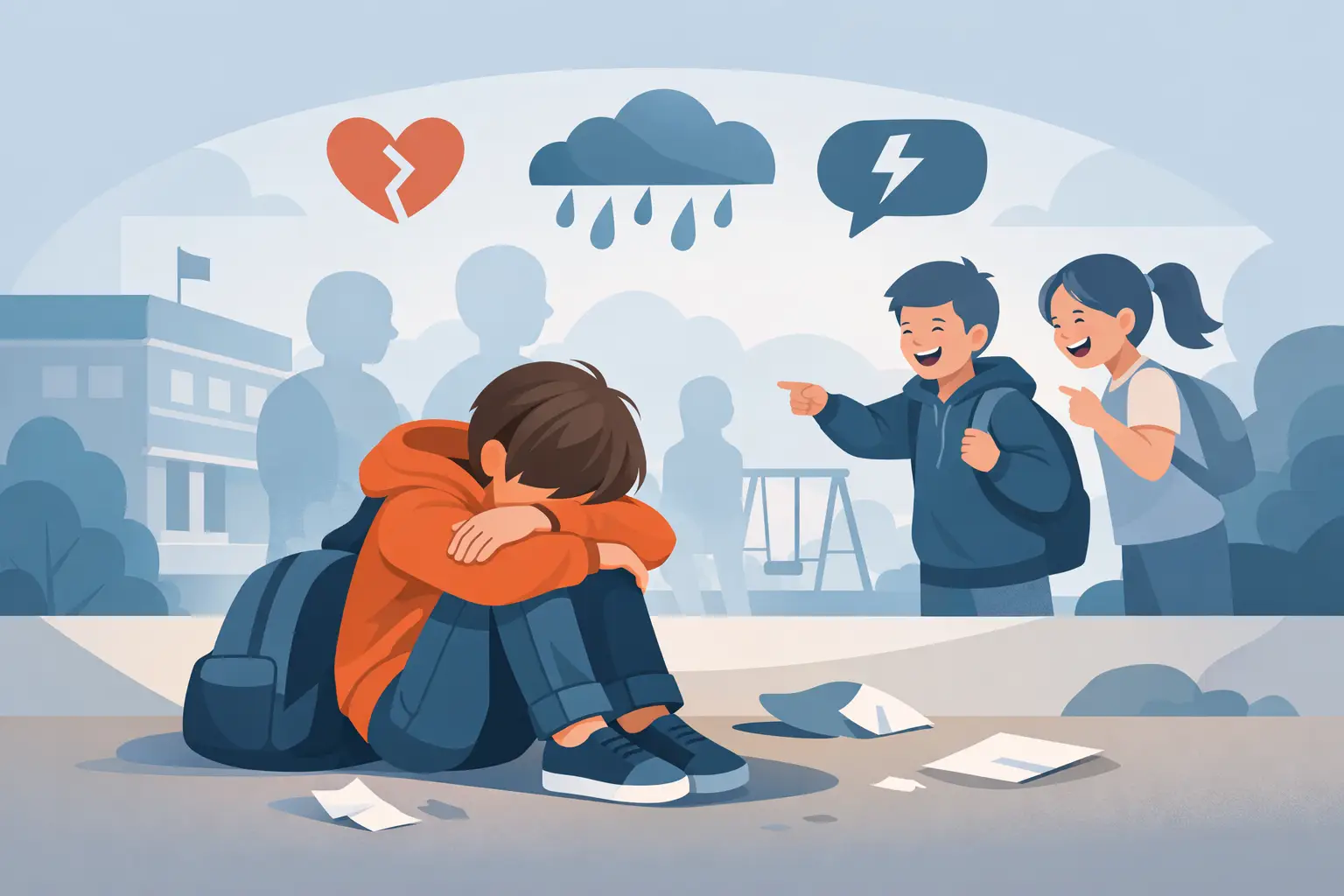
A child may not come home and say, “I’m being bullied.” They may worry that adults will make it worse, feel embarrassed, or believe no one can help. Instead, the signs your child is bullied may show up in a changed routine, a sudden fear of school, or a quiet withdrawal from the people and activities they once enjoyed.
Parents, caregivers, and school staff do not need to become detectives. They do need to notice patterns, ask with care, and respond together. Bullying is not a normal part of growing up. When behavior is repeated or likely to be repeated, involves a real or perceived power imbalance, and causes harm, adults have a responsibility to act.
Signs Your Child Is Bullied Can Be Easy to Miss
No single behavior proves bullying. A headache can be a headache. A bad grade can be a hard unit at school. But several changes that appear at once, especially around school, extracurricular activities, a bus route, or online spaces, deserve a closer look.
1. They suddenly do not want to go to school
A child who used to get ready easily may begin asking to stay home, missing the bus, arriving late, or visiting the nurse frequently. They may become unusually upset on Sunday evening or before a particular class, lunch period, locker room, or bus ride.
Avoid treating attendance struggles as defiance before asking what is behind them. A child may be trying to avoid a place where they feel unsafe, humiliated, or isolated. Chronic absenteeism can quickly affect learning, friendships, and confidence.
2. Their mood changes after school or after being online
Watch for an increase in irritability, sadness, anxiety, anger, or emotional shutdown. Some children cry easily; others seem flat, distracted, or quick to snap at siblings. A child who becomes distressed after checking a phone, gaming platform, or social media account may be dealing with cyberbullying, exclusion, threats, or the spread of embarrassing content.
Online bullying can follow a child home, which is why a safe home conversation matters. Do not begin by confiscating their device. That response can make a young person less likely to tell you what happened. First, listen and help preserve what they are seeing.
3. They have unexplained injuries or damaged belongings
Bruises, scratches, torn clothing, missing school supplies, or a damaged backpack may have ordinary explanations. Still, repeated incidents call for calm questions. Ask what happened, who was nearby, and whether this has happened before.
Physical bullying is only one form of bullying. Harm can also be verbal, social, relational, sexual, or digital. A child does not need visible injuries for the situation to be serious.
4. They pull away from friends and favorite activities
A child who stops talking about friends, quits a team or club they loved, eats alone, or avoids social events may be experiencing exclusion. Social bullying can look like rumors, deliberate isolation, group chats used to leave someone out, or pressure on other students not to associate with them.
This can be especially difficult to spot because it is often dismissed as friendship drama. Normal conflict happens between peers with relatively equal power and can be repaired with support. Repeated exclusion or humiliation that leaves one child feeling powerless needs a stronger response.
5. Their sleep, appetite, or physical health shifts
Stomachaches, headaches, nightmares, trouble sleeping, changes in appetite, and frequent visits to the school nurse can be signs of stress. Children and teens do not always have words for fear. Their bodies may communicate it first.
These symptoms can also reflect medical or mental health concerns unrelated to bullying, so do not assume. Contact a health care professional when symptoms persist or interfere with daily life, while also exploring whether something at school or online is contributing.
6. Schoolwork changes without a clear reason
A child who was engaged in class may suddenly lose concentration, stop completing assignments, or see grades fall. They may avoid group projects, refuse to participate, or ask to switch classes without explaining why.
Academic changes are not proof of bullying, but they are information. Teachers, counselors, and caregivers should compare observations rather than waiting for a child’s performance to recover on its own.
7. They ask for money, replace items often, or hide their phone
Repeated requests for extra money, missing lunch funds, lost possessions, or anxiety about sharing messages may point to coercion or harassment. Some students are pressured to hand over snacks, clothing, gaming items, passwords, or money. Others may be afraid that private photos, messages, or personal information will be shared.
Approach this without blame. Children who are targeted may already feel ashamed or worry they will be punished for something that happened to them.
How to Start the Conversation
The first conversation should communicate safety, not pressure. Pick a private moment when neither of you needs to rush out the door. Lead with what you have noticed rather than a label: “I’ve noticed you seem worried before school and you have not wanted to ride the bus. I care about you. Is something happening?”
Then pause. Silence can give a child room to speak. If they say no, do not force a disclosure. Let them know they can come back to you anytime and that you will take them seriously.
If your child does share something, stay calm even if you feel angry. Say, “I’m glad you told me,” and “You do not deserve to be treated this way.” Ask open questions about who, what, when, where, how often, and whether anyone saw it. Avoid promising total secrecy, because you may need to involve adults who can protect them. Instead, promise to include them in the next steps as much as possible.
Do not tell a child to ignore it, fight back, or solve it alone. Those messages can increase risk and place responsibility on the student being harmed. Encourage them to stay near supportive peers and trusted adults when possible, but make clear that adults will do their part too.
When and How to Involve the School
Contact the school promptly when bullying is suspected, particularly if it is repeated, escalating, discriminatory, physical, sexual, threatening, or affecting attendance and mental health. Start with the adult most connected to your child’s day, such as a teacher, counselor, grade-level administrator, or principal. Follow up in writing so there is a clear record of your concerns.
Share specific facts: dates, locations, students involved, witnesses, screenshots, photos of damage or injuries, and changes you have observed. For digital harassment, save evidence before reporting or blocking accounts when it is safe to do so. Do not ask your child to repeatedly revisit harmful posts just to collect more proof.
Ask the school what immediate safety measures will be in place. Depending on the situation, that might include an identified check-in adult, supervision during transitions, seating adjustments, a plan for the bus or lunch period, or a safe place your child can go if they feel threatened. Ask when you can expect an update and who will be your point of contact.
A strong response is more than telling students to be nice. It addresses the behavior, protects the targeted student from retaliation, supports students who witnessed the incident, and teaches accountability. Schools should also consider the broader climate that allowed the behavior to continue.
Build a Circle of Support Around the Child
Bullying becomes less powerful when a child knows they are not alone. Families can work with educators, counselors, coaches, activity leaders, and trusted relatives to create consistent support. The goal is not to make every adult aware of private details. It is to ensure the adults responsible for a child’s safety know what to watch for and how to respond.
Students who witness bullying also need clear guidance. They may fear becoming targets themselves, so “stand up” is not always realistic. Safer choices include checking in with the student afterward, refusing to share harmful posts, saving evidence, reporting concerns to an adult, and inviting the student to sit or work with them. Small acts of inclusion can interrupt isolation.
If your child talks about self-harm, suicide, wanting to disappear, or being unable to stay safe, seek immediate help. Call or text 988 for the Suicide & Crisis Lifeline in the United States, contact emergency services by calling 911 when there is immediate danger, or go to the nearest emergency department.
Every child deserves to enter school, ride the bus, join a group chat, and participate in community life without fear. Keep asking, keep listening, and keep bringing the right adults together. A child’s first brave disclosure should be met with a community ready to act.