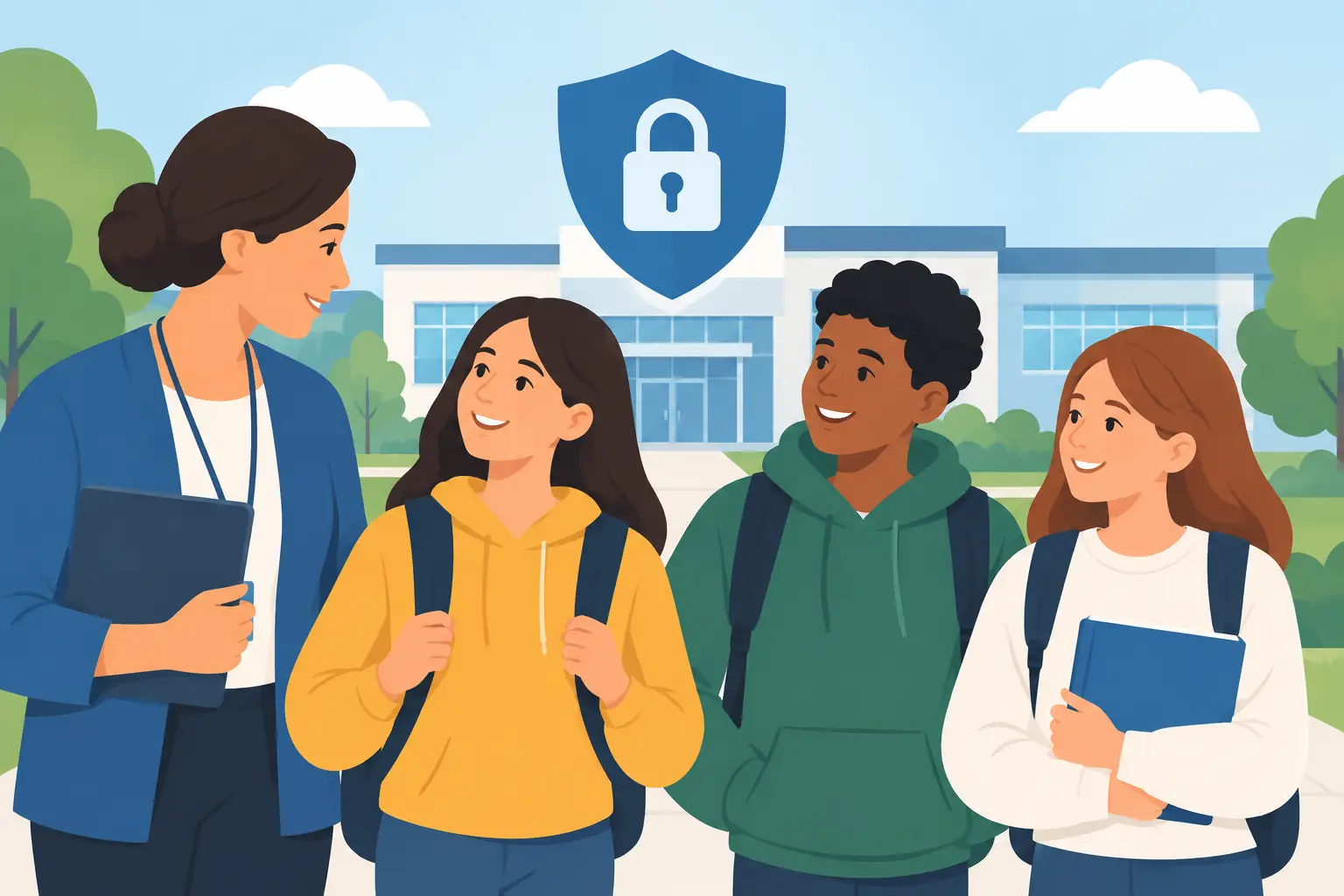
A student tells a trusted adult that classmates have been targeting them online, at lunch, and on the bus. The question is not simply whether the school has an anti-bullying policy. The question is what happens next, who is responsible, how the student will be protected, and whether the plan will hold when the adults are not in the room.
That is the purpose of student safety planning. It turns concern into clear, coordinated action before bullying, harassment, threats, or social isolation push a young person away from school, peers, and support. A strong plan does not treat safety as a one-time meeting or a form placed in a file. It gives students, families, educators, and community partners a shared way to notice harm, respond quickly, and prevent repeat incidents.
Start With Safety, Not Blame
When a student reports bullying, adults may feel pressure to determine exactly what happened immediately. Facts matter, and schools have a responsibility to investigate fairly. But the first response should focus on the student’s immediate safety and wellbeing.
Ask simple, direct questions: Are you safe right now? Where and when does this usually happen? Is anyone threatening to hurt you? Is it happening online, in person, or both? Who at school helps you feel safe?
Avoid asking why the student did not ignore it, speak up sooner, or defend themselves. Those questions can unintentionally shift responsibility onto the child who has been harmed. Students are more likely to seek help when they believe adults will listen without minimizing, blaming, or making promises they cannot keep.
A safety plan should be individualized. A seventh grader dealing with exclusion in the cafeteria needs a different plan than a high school student receiving threats through social media. The goal is not to isolate a student from school life. It is to restore their access to learning, relationships, activities, and belonging.
What a Student Safety Plan Should Include
The best student safety planning is specific enough to guide action on a difficult day, yet flexible enough to change as circumstances change. The plan should identify the people, locations, routines, and communication steps that will help a student stay connected and protected.
Trusted adults and clear check-ins
Every student should know the names of at least two adults they can approach at school. One may be a counselor, social worker, administrator, teacher, coach, bus driver, or other staff member with whom the student has a genuine connection.
Set a predictable check-in schedule. For some students, a brief morning and afternoon check-in may be helpful at first. For others, weekly contact is enough. Check-ins should not feel like surveillance. They are an invitation for the student to say what is working, what has changed, and what support they need next.
Safer routes, spaces, and transitions
Bullying often occurs in places with less adult visibility: hallways, locker rooms, buses, cafeterias, playgrounds, restrooms, and online group chats after school. A plan should identify where incidents have occurred and where the student feels most vulnerable.
This may mean adjusting supervision, arranging a supportive peer connection during lunch, identifying a safe space the student can access without embarrassment, or ensuring staff are present during arrival, dismissal, and transitions. Moving a student can sometimes provide short-term relief, but it should not become the default solution while the student causing harm faces no accountability. Schools must address the behavior and conditions that allow it to continue.
A reporting process the student can use
A student should not have to guess how to report a new incident. Write down the steps in plain language: who to tell, how to reach them, what information is useful, and what to do if the first adult is unavailable.
For younger students, that may be as simple as a visual reminder of trusted adults and a practiced phrase: “I need help. It happened again.” Older students may need guidance on saving screenshots, documenting dates and times, and reporting online threats without repeatedly revisiting harmful content.
Confidentiality should be explained honestly. Adults should protect a student’s privacy as much as possible, but they cannot promise complete secrecy when safety concerns require action. Clear expectations preserve trust better than vague reassurance.
Family communication and support
Families need timely, respectful communication about what the school is doing and what they can do at home. This does not mean sharing another student’s private disciplinary information. It means communicating the safety steps, the point of contact, and when the family can expect an update.
Caregivers can help by listening calmly, documenting concerns, watching for changes in sleep, attendance, mood, or appetite, and encouraging their child to stay connected to trusted adults. They should also know when to seek additional mental health support or emergency help, especially if a student expresses hopelessness, self-harm, or fear of immediate danger.
Make Prevention Part of the Plan
A plan that begins only after a crisis is necessary, but it is not enough. Schools need daily conditions that make bullying less likely to take root and more likely to be reported early.
Staff training should cover more than definitions and reporting requirements. Adults need to recognize relational aggression, repeated exclusion, identity-based harassment, retaliation, and harm that moves between school and digital spaces. They also need consistent language for responding in the moment: stop the behavior, separate students when needed, check on the targeted student, document concerns, and follow through.
Students need meaningful roles, too. Peer leadership, student advisory groups, and classroom conversations can help schools see risks adults miss. Students are often the first to know about a hostile group chat, a pattern on the bus, or a student being quietly pushed out of a friend group. Their input should shape supervision, education, and support, not be collected and ignored.
Prevention also requires belonging. Students are less vulnerable when they have affirming relationships, opportunities to contribute, and adults who consistently communicate that differences in identity, ability, appearance, religion, family background, and interests are not invitations for cruelty.
Build Accountability Without Creating More Harm
Accountability matters. Students who bully or harass others need clear limits, appropriate consequences, and opportunities to learn new ways of handling conflict, status, anger, and peer pressure. A safety plan cannot ask the targeted student to carry the burden of reconciliation.
Restorative conversations may be useful in some situations, but only when they are voluntary, carefully facilitated, and safe. They are not appropriate when there is an active threat, a major power imbalance, repeated intimidation, or a student feels pressured to forgive. A student should never have to face the person who harmed them just to prove they are being cooperative.
Schools should also watch closely for retaliation. It can appear as rumors, social exclusion, online posts, friends joining in, or complaints that the reporting student is “causing drama.” Retaliation is not a side issue. It is often the reason students stop reporting harm.
Review the Plan and Measure What Changes
Student safety planning should not end when an incident report is closed. Set a date to review the plan, ideally within days rather than weeks when concerns are active. Ask the student directly: Do you feel safer? What is still happening? Are adults responding when you ask for help? Is there a new place, time, or online space we need to address?
School leaders should also look beyond individual cases. Are reports clustering in one location? Are students from particular groups reporting less safety or less trust in adults? Are staff response times consistent? Attendance, nurse visits, counseling referrals, climate surveys, and student listening sessions can reveal patterns that disciplinary records alone may miss.
For schools ready to strengthen their prevention efforts, End Bullying Today can help bring the conversation into the building through school-centered education and community action. A safer school is not created by one assembly, one policy, or one caring adult. It is built when the whole community agrees that every student deserves to learn without fear and backs that promise with everyday action.
The next time a student asks for help, let the answer be more than “we will look into it.” Let it be a plan they can understand, adults they can reach, and a school community willing to stand beside them until safety feels real again.