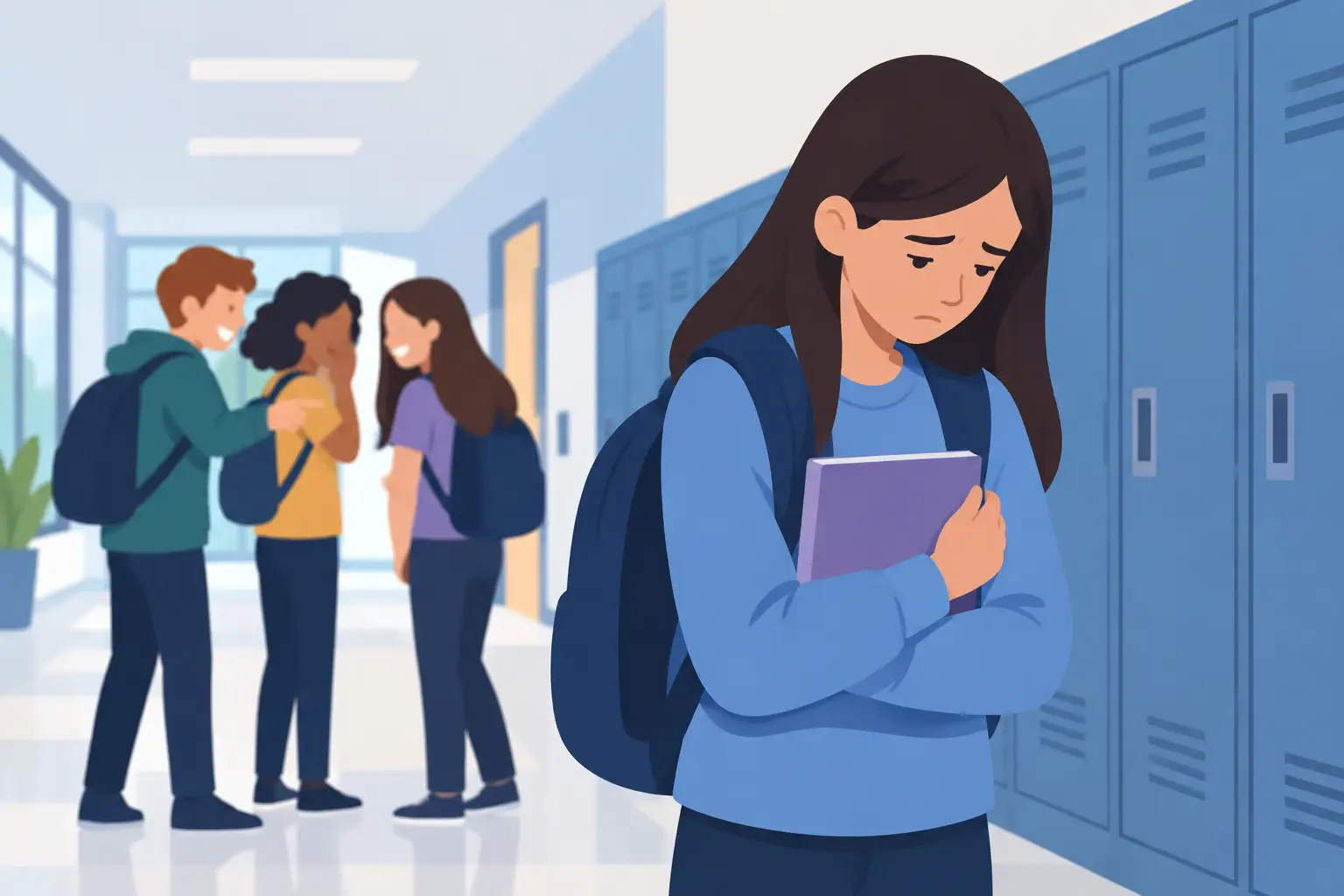
A student may be teased in the hallway, excluded from a group chat, or targeted during lunch while adults see only pieces of the problem. That gap helps explain what makes school bullying persistent: harmful behavior can become part of a school’s daily routine when students expect it, adults miss it, and no coordinated response changes the conditions around it.
Bullying is not simply a conflict between two children who need to “work it out.” It involves a real or perceived power imbalance and behavior that is repeated or likely to be repeated. It can be physical, verbal, social, or digital. When it continues, the impact reaches far beyond one incident. Students may avoid school, withdraw from friends, struggle academically, or carry anxiety through every part of the day.
Ending persistent bullying requires more than a poster, a single assembly, or a policy that stays in a handbook. It takes adults and students working together to make safety, accountability, and belonging visible every day.
What Makes School Bullying Persistent?
Persistent bullying thrives when the behavior is rewarded, ignored, or treated as inevitable. Sometimes the reward is laughter from peers. Sometimes it is status, attention, control, or the fear that keeps other students silent. Sometimes the message is less direct: an adult sees a pattern but responds only to the latest incident, leaving the larger problem untouched.
A school can have caring educators and still struggle with bullying if its systems make reporting difficult, supervision inconsistent, or follow-through unclear. The goal is not to blame individual teachers or families. The goal is to identify the conditions that allow harm to repeat and replace them with conditions that protect students.
Peer attention can turn harm into social power
Bullying often has an audience. Bystanders may laugh, share a video, forward a screenshot, or remain silent because they fear becoming the next target. Even a small amount of peer approval can make a student who bullies feel powerful.
This does not mean every bystander supports bullying. Many students feel uncomfortable but do not know what to do safely. They may believe reporting is “snitching,” worry that adults will reveal their name, or assume nothing will change. Schools can interrupt this pattern by teaching students specific, realistic choices: leave with the targeted student, refuse to share harmful content, document what happened, report privately, and seek help from a trusted adult.
Students also need to see that speaking up leads to protection and action. A reporting system earns trust through what happens after a report, not through the form or slogan alone.
Inconsistent adult responses send mixed messages
When one adult addresses cruel behavior promptly while another dismisses it as joking, students receive conflicting signals. A student may stop reporting after being told to ignore it, toughen up, or avoid the person causing harm. Those responses can be especially damaging when the behavior involves race, disability, religion, gender identity, sexual orientation, language, body size, or another part of a student’s identity.
Consistency does not mean every situation receives the same consequence. Circumstances, developmental level, safety needs, and the seriousness of the conduct matter. It does mean every concern is taken seriously, documented appropriately, assessed for safety, and addressed in a timely way.
School leaders can support consistency by setting clear response protocols and giving staff practical training. Staff need to know who to notify, what to document, how to avoid promising confidentiality they cannot guarantee, and how to communicate with families without escalating the situation.
Reporting can feel riskier than staying silent
A student who is being bullied may fear retaliation, embarrassment, or being labeled a problem. Students who witness bullying may have the same concerns. If reporting requires a student to publicly confront peers, navigate a complicated process, or repeat painful details to several adults, many will decide it is not worth the risk.
Offer more than one path to ask for help. A student may need to speak with a counselor, teacher, coach, administrator, or trusted support staff member. Anonymous reporting can help reveal patterns, though it may limit a school’s ability to investigate every detail. Direct reporting can provide more information but requires strong protections against retaliation. Schools should explain these trade-offs plainly and tell students what they can expect next.
Follow-up matters just as much. A quick check-in after a report can show a student that adults have not forgotten. Continued monitoring is critical because bullying often shifts location, timing, or format after intervention.
Digital spaces extend the school day
Bullying no longer ends when the dismissal bell rings. Group chats, gaming platforms, social media, and shared images can carry conflict into the evening and back into classrooms the next morning. Digital bullying can spread quickly, remain visible, and draw in students who were not present when it began.
Schools cannot control every online interaction, and families have a central role in supervising devices and platforms at home. Still, schools have a responsibility to respond when off-campus conduct creates a meaningful disruption at school or interferes with a student’s safety and access to learning.
Students need guidance that is more useful than “stay off social media.” Teach them how to save evidence, block accounts when appropriate, avoid reposting harmful material, and report threats or harassment. Families need a clear point of contact and an understanding of how the school will assess digital incidents.
Why One-Time Responses Rarely Last
A consequence may stop an immediate incident, but it does not automatically change the relationships, norms, or unmet needs that fueled it. The student targeted by bullying may still feel unsafe. The student who bullied may still seek status through intimidation. The peer group may still view cruelty as entertainment.
That is why prevention must include accountability and skill-building. Students who engage in bullying behavior need clear boundaries and meaningful consequences, but they may also need support to build emotional regulation, empathy, conflict-management skills, and healthier ways to connect with peers. Support is not an excuse for harm. It is part of reducing the chance that harm continues.
Restorative conversations can be helpful in some cases, but they should never be automatic. They require preparation, voluntary participation, and careful attention to power differences and safety. A student who was targeted should not be pressured to forgive, meet, or explain their pain in order for adults to consider the matter resolved.
Build a School Climate That Makes Bullying Harder to Sustain
A safer school culture is built in ordinary moments: how adults greet students, how classrooms handle exclusion, whether concerns are followed through, and whether students believe they belong. Prevention works best when it is woven into the school day rather than reserved for an awareness week.
School and district leaders can begin by looking for patterns. Are incidents concentrated in hallways, buses, locker rooms, cafeterias, or online spaces? Are certain grades, student groups, or times of day affected more often? Do students know whom to tell? Climate surveys, incident records, attendance data, and student listening sessions can reveal what a single report cannot.
Then act on what the data and students say. Increase supervision where students identify blind spots. Establish predictable routines for arrival, lunch, transitions, and dismissal. Make expectations for respectful behavior clear in classrooms, activities, athletics, and digital spaces. Recognize students who include others and intervene safely, not only students who achieve academically or athletically.
Families are essential partners. Caregivers should be invited into prevention before a crisis occurs, with clear information about warning signs, reporting options, and supportive language to use at home. Students need to hear a consistent message from the adults around them: you deserve safety, you are not alone, and asking for help is an act of strength.
Turn Concern Into Coordinated Action
Persistent bullying is a community problem because students move through a community of classrooms, buses, teams, homes, and online spaces. No single teacher, parent, counselor, or student can carry the full responsibility. But every person can help change the conditions that let bullying last.
Schools can bring students, staff, and families together around practical prevention. Give adults the training and time to respond well. Give students credible ways to report and lead. Invite community partners to reinforce a culture of dignity and belonging. Programs such as the End Bullying Today national tour can help start these conversations in a visible, school-centered way, but the daily commitment afterward is what makes change real.
The next student who witnesses cruelty should know exactly where to turn. The next student who is targeted should not have to prove they deserve help. Build that response now, before silence becomes the reason bullying survives.