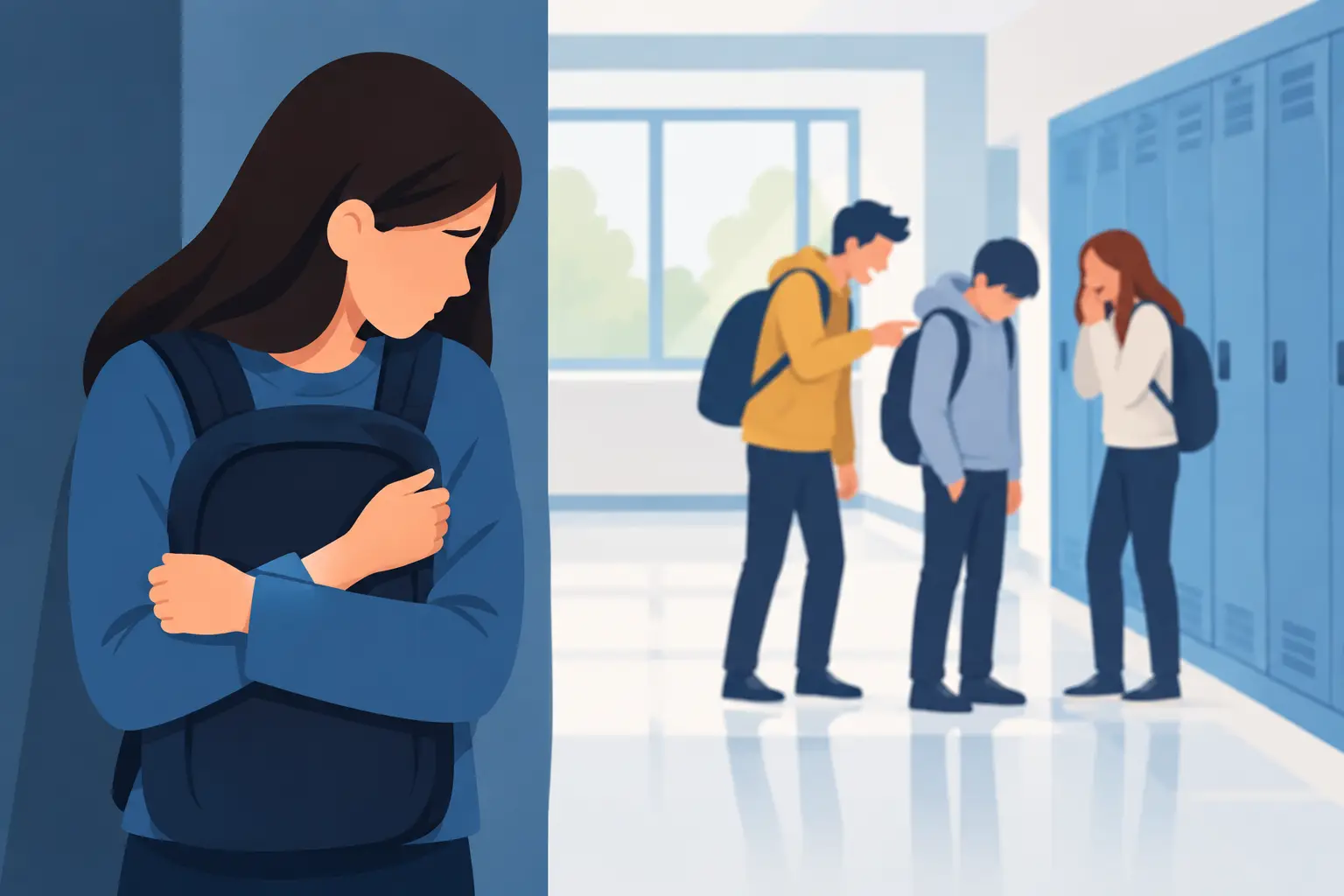
A student may walk past the counselor's office three times before going in. They may type a message to a teacher, then delete it. They may tell a parent that everything is fine while their attendance slips, their grades change, or they stop sitting with friends at lunch. Silence is not proof that bullying is minor. It is often proof that a student has calculated the risk of speaking up.
Understanding why students fear reporting bullying is essential for every adult responsible for school climate. A reporting system is only as effective as a student's belief that adults will protect them, take them seriously, and respond without making the situation worse.
Reporting Can Feel More Dangerous Than Staying Silent
For many students, bullying is not a single incident. It is a social environment they have to enter every morning, navigate between classes, and carry home through group chats and social media. Reporting can feel like a decision that puts a target on their back in a place they cannot easily leave.
Students may worry that the person bullying them will find out who reported it. They may expect retaliation, such as rumors, exclusion, threats, damaged belongings, or more online harassment. Even when a school intends to keep a report private, students often know that details can travel quickly through peer groups.
This fear is especially strong when the student who caused harm has social influence, a large friend group, athletic status, or a history of avoiding consequences. A young person may reasonably ask: If adults could not stop it before, what will happen after I speak up?
The label of "snitch" carries real social weight
Students do not always see reporting as a neutral safety step. In some peer cultures, asking for help is framed as betrayal, weakness, or creating drama. Bystanders may stay quiet for the same reason. They may care deeply about what is happening but fear losing friends or becoming the next person targeted.
Adults can unintentionally reinforce this pressure when they tell students to handle it themselves without first assessing safety, power differences, or repeated behavior. Encouraging problem-solving can be useful in ordinary peer conflict. It is not an adequate response when there is a pattern of intimidation, humiliation, exclusion, threats, or a clear imbalance of power.
Why Students Fear Reporting Bullying to Adults
Fear of retaliation is only part of the picture. Many students have learned, from experience or observation, that reporting may not lead to meaningful help.
A student may have previously been told to ignore it, toughen up, stop being sensitive, or avoid the person causing harm. They may have watched another student report bullying and then seen nothing change. Sometimes adults respond publicly, calling students into a hallway or confronting the alleged aggressor in a way that makes the source of the report obvious. Even a well-meaning intervention can damage trust if it leaves the reporting student exposed.
Students also worry they will not be believed. Bullying often happens in places with limited adult supervision: buses, locker rooms, bathrooms, hallways, lunch lines, online spaces, and private messages. When there is no video, no witness willing to speak, or no visible injury, a student may assume their account will be dismissed as one person's word against another's.
For students who have experienced racism, disability-based harassment, anti-LGBTQ+ harassment, language-based bias, or other forms of identity-based targeting, the concern can be even deeper. They may wonder whether adults will understand the harm, minimize it as a joke, or treat them as the problem for reacting.
Privacy matters, but false promises do harm
Students deserve to know what will happen after they make a report. Adults should not promise absolute confidentiality if they may need to involve administrators, families, counselors, or safety personnel. But they can explain clearly: who will be told, what details will be shared, what will remain private when possible, and how the school will guard against retaliation.
That honesty builds more trust than vague reassurance. A student is more likely to come forward when they know they will have a voice in the plan rather than being surprised by it.
Make Reporting a Relationship, Not a Form
Anonymous reporting tools, online forms, and designated hotlines can lower the first barrier to speaking up. They are particularly helpful for students afraid of being seen entering an office or approaching a teacher. Yet a tool alone cannot create safety. Students need a real person who follows up with care.
Every school should make reporting routes visible, simple, and repeated throughout the year. Students should know they can tell a trusted teacher, counselor, administrator, coach, school nurse, bus driver, or another adult. They should also know that a witness can report concerns, even if the targeted student is not ready to speak.
The first response matters enormously. A calm adult can say: “Thank you for telling me. You did the right thing. I am going to take this seriously, and we will talk about what happens next.” That response does not assume every detail is settled. It communicates belief in the student's right to safety and a commitment to investigate fairly.
Avoid asking, “Why didn't you report this sooner?” as a first question. Students often hear it as blame. A better question is, “What made it hard to tell someone?” Their answer can reveal whether the barrier is fear, shame, prior inaction, peer pressure, or uncertainty about where to go.
What Schools Can Do Before a Student Reports
A safer reporting culture is built long before a crisis. School leaders need consistent systems, trained adults, and visible follow-through. A policy sitting in a handbook will not reassure a student who has seen cruelty go unchecked.
Schools can strengthen trust by taking four practical steps:
- Teach the difference between conflict, teasing, harassment, and bullying in language students understand, including how online behavior can cause harm at school.
- Establish clear reporting options and explain them repeatedly in classrooms, assemblies, advisory periods, family communications, and student activities.
- Respond promptly, document concerns, check for retaliation, and communicate appropriate next steps without sharing private disciplinary information.
- Train all staff, not only counselors and administrators, to receive a report without minimizing, blaming, or forcing students into unsafe face-to-face meetings.
Restorative conversations can help repair harm in some cases, but they are not appropriate in every situation. They should never be forced on a student who feels unsafe, and they should not replace accountability or a safety plan. The right response depends on the severity, frequency, power imbalance, student needs, and risk of continued harm.
School leaders should also look beyond the individual incident. Are students avoiding a particular hallway? Is harassment recurring on a bus route? Are certain groups reporting less often than others? Patterns reveal where supervision, education, staffing, and culture need attention.
What Parents and Caregivers Can Say at Home
A child who finally shares an experience of bullying may be watching closely for the adult's reaction. Anger is understandable, but an immediate promise to confront another family or post online can make the child fear losing control of the situation.
Start by listening. Thank them for telling you. Ask what has been happening, whether they feel safe right now, who is involved, where it occurs, and what support they want from you. Save relevant messages, screenshots, dates, and names, but do not make evidence-gathering feel like an interrogation.
Then contact the school through its established process and ask for a specific follow-up plan. Families can reasonably ask who will receive the concern, how safety will be addressed during the school day, when they can expect an update, and how the school will monitor retaliation. Keep communication factual and focused on the student's wellbeing.
If a child is in immediate danger, has been threatened, or expresses hopelessness or thoughts of self-harm, seek urgent help through local emergency services, a crisis resource, or a qualified mental health professional. Safety comes before procedure.
Give Students a Reason to Believe Adults Will Act
Students do not need adults to promise that reporting will be easy. They need adults to prove that they will not face the next day alone. That proof comes through predictable responses, protected privacy, meaningful accountability, and adults who keep checking in after the initial report.
A student who speaks up is not creating a problem. They are giving their school community a chance to stop harm and choose a safer path. When schools, families, peers, and community partners make that path visible, more young people can move from fear to trust - and from silence to support.